A fire can grow fast, but fire sprinklers are built to stop it early. NFPA data shows that a single sprinkler controls a home fire about 90% of the time, which helps limit damage and time for flames to spread. NFPA also reports that sprinklers cut the chance of dying in a fire, and average property loss is far lower when sprinklers are present.
So how do these systems work without waiting for a smoke alarm or a human to notice? It comes down to one simple idea: heat activates the sprinkler head closest to the fire. That targeted response buys minutes, and minutes matter.
To understand fire sprinkler systems, you need to know the parts, what triggers them, and why only some heads activate. You also need the common myths, plus the practical benefits for homes and workplaces. Let’s walk through how fire sprinklers do their job, step by step.
Key Parts of a Fire Sprinkler System
Think of a fire sprinkler system like a set of dominos plus a water hose waiting behind them. Most of the system stays still, pressurized, and ready. Then heat hits a specific sprinkler head, and only the nearby head releases water.
For a clear overview, it helps to picture a whole network made of a few core pieces. If one piece fails, the system might not perform as intended. That’s why fire sprinkler maintenance matters, not just installation. For a practical look at how sprinkler systems are laid out, see this fire sprinkler system guide from Kord Fire Protection.
Here’s what the system usually includes:
- Sprinkler heads: The “trigger” at the ceiling. Each head has a heat-sensitive link or bulb that releases water only when it gets hot enough.
- Piping network: Metal pipes that carry water from the supply to the heads.
- Water supply: This can be municipal water (city lines) or a tank and pump system in some buildings.
- Valves and controls: These manage water flow, keep the system in the right state (wet, dry, or pre-action), and support monitoring.
- Drains, gauges, and alarms (in some systems): They help verify pressure and alert staff if something goes wrong.
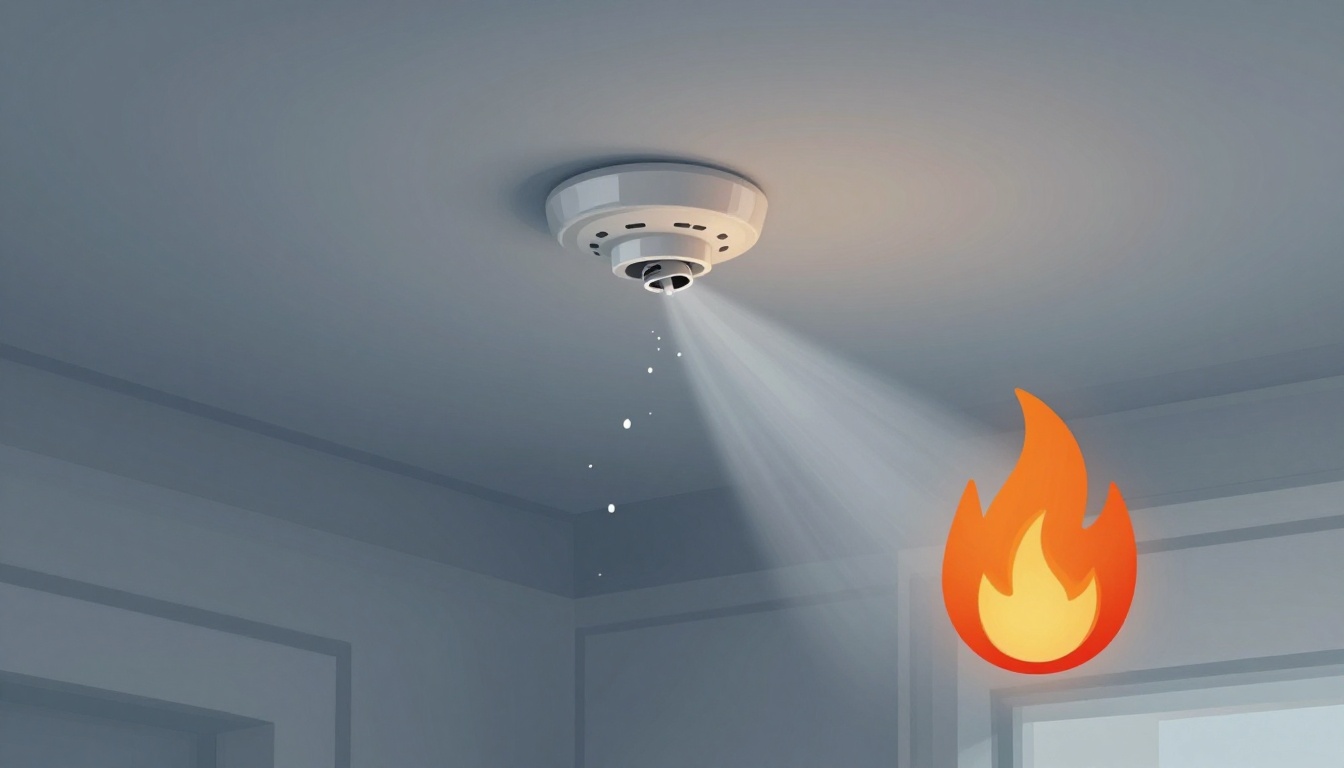
Visually, picture a ceiling with small metal nozzles. Behind that nozzle sits a heat-sensitive element. When it breaks, water flows upward through the head and out through a deflector. The deflector spreads the water in a spray pattern, like a controlled shower meant to cool and slow flames.
Also, sprinklers don’t work by “smell” or “smoke.” They work by temperature. As HowStuffWorks explains in plain terms, the movie-style “smoke sets off all sprinklers” idea is wrong. Most heads stay inactive because they never reach their activation heat. See HowFireSprinkler systems work on HowStuffWorks for a simple breakdown.

Sprinkler Heads: The Heroes That Spot Heat First
Every sprinkler head is basically a small heat sensor plus an outlet. Most residential and many light commercial heads use either:
- A liquid-filled glass bulb, or
- A metal link (fusible link)
Both versions rely on a heat rating. In common designs, heads are often set to activate in the range of about 135°F to 165°F (depending on the head type and the system design). When the surrounding air near the ceiling warms up enough, the heat-sensitive element fails.
Imagine the glass bulb like a thermometer that can’t “guess” the temperature. It just waits. When heat reaches the right threshold, the element breaks, and the head opens.
Once it opens, water exits the head, guided by a deflector. That deflector turns the stream into a spray pattern, so water lands over a wider area instead of a narrow jet.
One fun detail: sprinkler heads come in different color finishes based on temperature rating. The exact color scheme can vary by manufacturer, but the idea stays the same: color helps inspectors and technicians spot the head’s activation range quickly.
Finally, note the key benefit. A fire usually heats only a small zone at first. That means only the closest head reaches activation heat, while others stay sealed.
Piping and Water Supply: Delivering the Fight
Sprinkler heads are the “trigger,” but piping and water supply are the “delivery.” For a system to work, it needs the right water flow at the right time.
Most sprinkler systems use pressurized piping. In wet-pipe systems, water fills the pipes and sits ready. In dry and pre-action systems, water may not be in the pipes, so valves and air pressure control the state of the system.
Water may come from:
- Municipal water pressure (city water main), or
- A pump and tank setup, especially in larger buildings or areas with unreliable pressure
When a head activates, the system needs pressure to move water fast. That pressure helps water reach the fire area quickly, which is when it’s most useful.
In plain terms, the system tries to do two jobs at once:
- Start water flow quickly, and
- Keep flow controlled, so water goes where it’s needed, not everywhere.
If you’ve ever used a garden hose with a kink, you know what slow flow feels like. Fire sprinklers aren’t like that. Proper system design aims for steady flow so that once the head opens, the response is immediate.
Step by Step: How Sprinklers Spring into Action During a Fire
Fire sprinklers don’t wait for a fire alarm. They react to heat like a safety thermostat. And they do it locally, head by head.
Here’s what the sequence looks like in a typical scenario:

- The fire starts and produces heat. Flames warm the air. Hot gases rise toward the ceiling.
- Heat reaches the sprinkler head near the fire. Hot air carries enough temperature upward to warm the head area.
- The heat-sensitive element fails. The glass bulb breaks or the fusible link melts.
- Water flows from that single head. The plug or seal releases, and water begins spraying.
- The spray cools and controls. The water spreads in a pattern, helping reduce heat and slow flame growth.
- Other heads may activate later, if needed. If heat spreads to other zones, nearby heads can open too.
That “one head first” detail is a big deal. It limits water use and helps limit damage. It also means the system can start action before the fire gets enough time to spread.
So why does this beat waiting for firefighters? Because fires often grow faster than people expect. In many cases, sprinklers keep the fire small long enough for occupants to get out safely and for emergency crews to work on a simpler situation.
That also explains why the system needs proper upkeep. If a valve sticks or the pipes aren’t in the right state, the head might open but water flow could be delayed.
Types of Sprinkler Systems and When to Use Them
Not every building wants the same sprinkler design. The “right” system depends on climate, room use, and how sensitive the contents are.
The most common types are:
| System type | What’s inside the pipes | Best fit | Main tradeoff |
|---|---|---|---|
| Wet pipe | Water-filled pipes | Most heated spaces | Pipes can freeze in cold areas |
| Dry pipe | Air (or nitrogen) in pipes | Unheated areas, warehouses | Adds response time for filling pipes with water |
| Pre-action | Water is withheld until triggers happen | Valuable areas, sensitive spaces | More steps before water flows |
This table idea matches what many sprinkler contractors describe in their comparisons, including wet vs dry vs preaction explanations from CA-Fire Protection.
Also, standards like NFPA 13 focus on design and installation, while NFPA 25 focuses on inspection and maintenance. NFPA 25 keeps sprinklers effective over time, and it’s updated as industry practices improve. If you want a maintenance-focused view, NFPA 25 explained by Engineered Corrosion Solutions covers why testing and inspection routines matter.

Wet Pipe Systems: Fast and Simple for Everyday Use
Wet pipe is the most common sprinkler system. Here’s why it works well: the pipes are already filled with water. So when a head opens, water sprays right away.
This makes wet pipe ideal for most homes, apartments, offices, schools, and other spaces where temperatures don’t drop low enough to freeze the water in the pipes.
There’s also less “waiting” built in. No extra steps are needed to move water into the pipes. As a result, wet pipe often gives the quickest response time.
Of course, wet pipe isn’t a fit for unheated or freeze-prone areas. If water sits in pipes and temperatures drop, you risk freezing. A frozen pipe can block flow, so system design has to match the environment.
That mismatch is also why you’ll see different plans in garages, warehouses, and some exterior or cold-adjacent zones.
Dry and Pre-Action: Smart Choices for Tricky Spots
Dry pipe systems exist for one main reason: freezing. In dry pipe, the pipes contain air instead of water. A sprinkler head still activates with heat. But until that activation happens, water stays held back by valves.
Once a head opens, air pressure drops, and valves allow water to enter the pipes. That means dry pipe has a slightly longer sequence than wet pipe. Still, it’s designed to handle cold spaces safely.
Pre-action systems add another layer of control. They typically use triggers that help confirm what’s happening before water enters the piping. For example, the system may require a fire detection signal and then a sprinkler activation, depending on the design.
That extra step can help in spaces where you don’t want water to flow from a single accidental head opening. Think libraries, archives, museum storage, or areas full of equipment that can’t get wet.
If you want an industry-style overview of why these systems differ, Understanding the Different Types of Fire Sprinkler Systems by DFS Pumps summarizes wet, dry, pre-action, and deluge at a high level.
Debunking Myths and Uncovering Real Benefits
People worry about fire sprinklers for a few common reasons. Movies shaped the myths. Stories shaped the fears. But the actual system behavior is different.
Let’s clear up the biggest misconceptions first.
Myth: Sprinklers Drown Everything in Water.
Fact: Unlike movies, only one or a few heads activate. Each head stays sealed until its own heat threshold is reached. A nearby sprinkler can open, while others remain closed because the fire hasn’t heated their area yet.
You can see this point reinforced in NFPA material designed for homeowners. The NFPA resource The Truth About Home Fire Sprinklers explains that residential sprinklers respond to heat at the head, not smoke everywhere.
Myth: Smoke Triggers Sprinklers Automatically.
Fact: Heat triggers the head. Smoke may travel upward fast, but the sprinkler still waits for the air temperature around the head to reach its activation range.
Myth: Sprinklers Are Always Worse Than Fire.
Fact: In many cases, sprinklers reduce overall harm. That’s because they often keep a fire smaller. Smaller fires mean less burning, fewer toxic gases, and less damage.
Now for the benefits that matter to real people. When sprinklers work as designed, they help in three areas.
First, they control a fire early. That can keep flames from spreading to other rooms.
Second, they help save lives by slowing the fire long enough for people to escape.
Third, they help protect property. NFPA has reported large drops in average property loss when sprinklers are present, compared with similar scenarios without sprinklers.
For a maintenance reminder that connects to real life, this is worth saying clearly: a sprinkler system only performs well when it stays in working order. NFPA’s guidance emphasizes routine inspections and proper care, since corrosion, obstructions, or valve issues can reduce performance.
It also helps to follow simple homeowner rules:
- Don’t hang decorations from sprinkler heads.
- Keep ceilings clear around heads.
- If you notice water stains or a “damaged” head, call a pro.
Why They Save More Than They Cost
Sprinklers cost money to install, but that cost often looks different once you compare it to what fire damage can do.
Here are the big reasons people choose sprinkler protection anyway:
- Life safety: Sprinklers can slow a fire long enough for evacuation.
- Faster control: Early action can prevent flashover in some fires.
- Less property loss: Smaller fires typically mean less cleanup and fewer repairs.
- Insurance and inspections: In many areas, sprinklers help meet requirements and may improve insurability.
Maintenance matters because costs rise when systems fail. That’s why inspection programs follow NFPA 25 and local code requirements. If you want another myth-and-fact perspective, SMC Fire’s Myths & Facts page covers common misunderstandings, including the “all heads discharge at once” myth.
The bottom line is simple. Fire sprinklers are not meant to “fight fire forever.” They’re meant to control the first moments. Those first moments can decide whether you have a small, contained incident or a full emergency.
Conclusion
So, how do fire sprinkler systems work? They rely on heat-activated sprinkler heads, a prepared water supply, and valves that let water flow when the nearby head reaches its temperature rating.
When you picture the process like a local trigger that opens one head at a time, the system makes more sense. It’s not smoke-driven chaos. It’s controlled response built to slow flames early.
If you live in a home or manage a building, the best next step is simple: learn what type of system you have, then schedule inspections with a qualified sprinkler contractor. If sprinklers are already installed, treating them like important safety equipment protects people and property. After all, the knowledge to spot problems early can save lives.