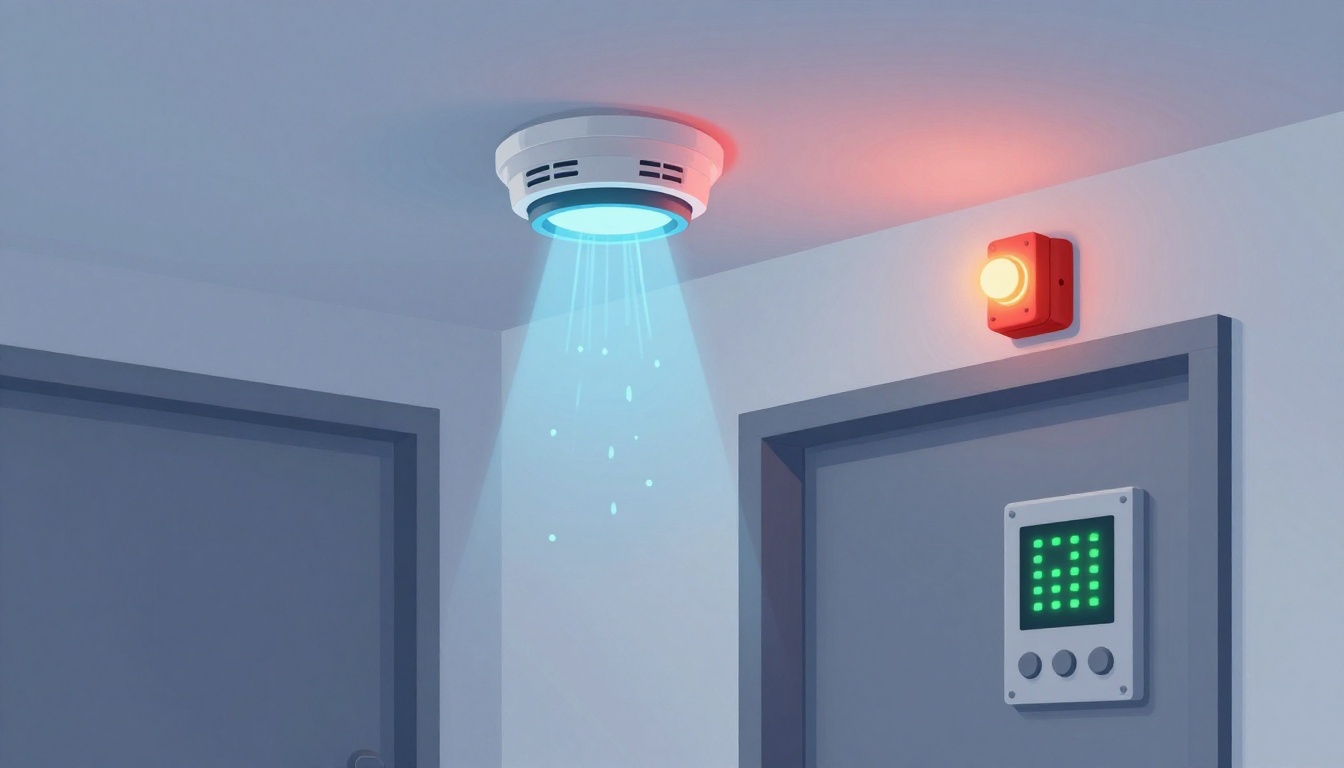
A small kitchen fire can turn into a big problem in minutes. In one case, the smoke detector triggered fast, the right sprinklers controlled the flames early, and the building alarms helped people get out while it was still manageable. That kind of outcome is why fire protection systems matter so much.
At a high level, these systems have five main components working as one team. Detection and alarms spot smoke or heat, then alert you with horns, strobes, and clear signals. Suppression fights the fire right away, often with sprinklers, extinguishers, or other release systems. Alarm notification makes sure people in the space know what to do, and it connects into emergency procedures. Control systems monitor device health and help coordinate actions like shutting down fans or sending signals where needed. Finally, passive protection slows spread with fire-rated walls, doors, and compartments.
Because fire codes keep updating, the NFPA standards in the 2026 timeframe aim to improve reliability, wiring and monitoring rules, and real-world performance for detection and notification. So even if your system already works, newer requirements can help you spot gaps.
This guide breaks down each component in plain terms, so you can review your setup with confidence.
Detection Systems: Catching Fire Signs Before They Turn Deadly
Detection systems work like a smoke-free early warning network. They watch for the first hints of danger, then sound alarms fast enough for people to react, not panic.
The biggest mistake most people make is thinking one type of detector fits every room. In reality, smoke, heat, and flame behave differently. So detection tools should match how fires typically start in each space.
Popular Types and Where They Shine
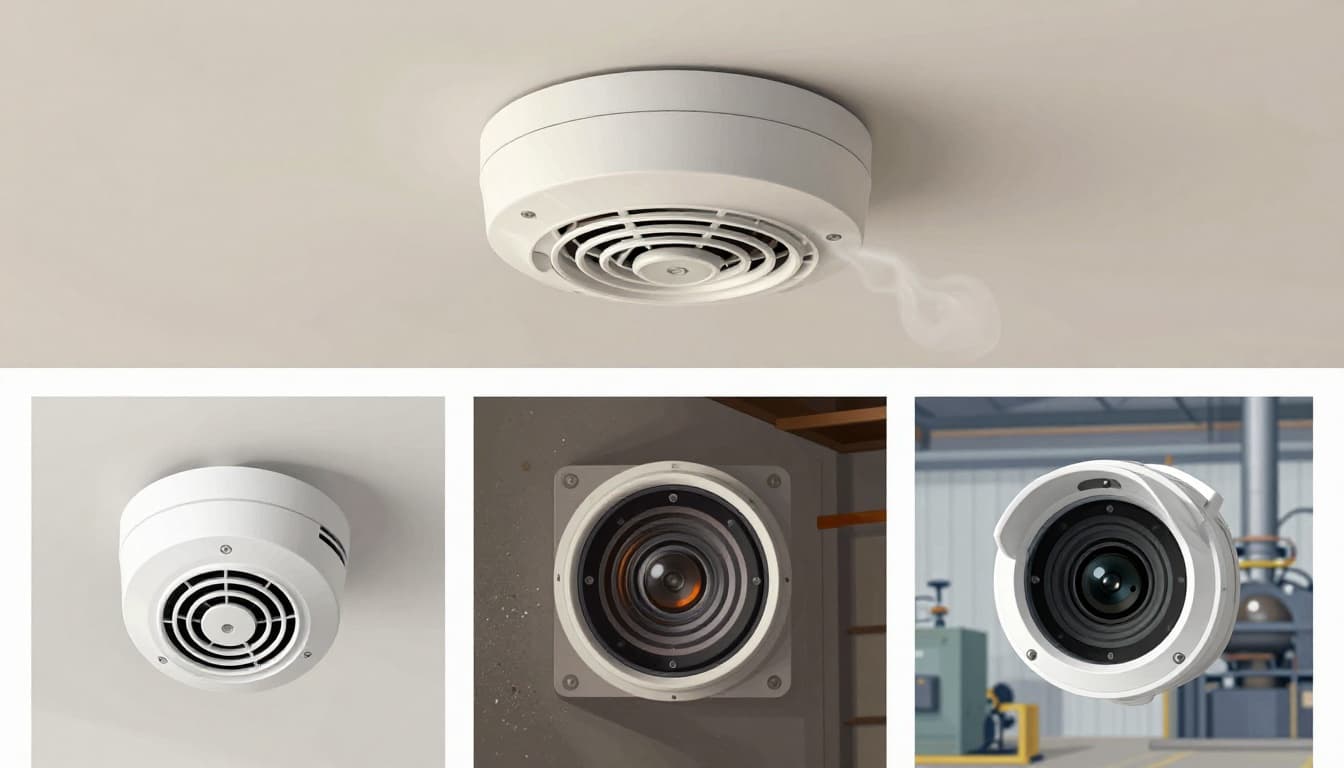
Smoke, heat, and flame detectors each “see” a different fire clue.
A quick way to think about it: smoke is the early whisper, heat is the rising body heat, and flame is the loud proof.
Here’s how the main types compare in everyday terms:
| Detector type | What it responds to | Typical best use | Common “don’t use here” |
|---|---|---|---|
| Smoke detectors | Visible or invisible particles | Homes, offices, hallways | Places with heavy dust, steam, or grease mist |
| Heat detectors | Fast temperature rise (or high fixed temp) | Kitchens, garages, dusty rooms | Areas where slow, smoky fires matter most |
| Flame detectors | Light patterns from flames | Warehouses, outdoor bays, industrial hazards | Locations with limited line of sight |
Smoke detectors shine in homes because many fires start with smoldering. That smoldering creates particles before flames. As a result, a normal household smoke alarm can give you early warning, even when you think everything looks fine.
Heat detectors work well where smoke alarms struggle. For example, a warehouse corner that’s dusty, or a shop area near hot equipment, often triggers false alarms. Heat detectors ignore “normal mess” and focus on temperature change.
Flame detectors are made for settings where you can see flame clearly. They can spot intense light from burning materials and fire sources. A factory line with open views and high ceilings is a classic example.
Next come detector formats that mix benefits or simplify install work:
- Multi-sensor detectors combine more than one sensing method (like smoke plus heat). They reduce unwanted alarms while still responding early.
- Addressable systems help panels identify the exact device that triggered. That matters when crews need to go straight to the problem spot.
- Wireless detectors speed retrofits because you can install without major wiring runs. They also help when ceilings and walls are already finished.
- Acoustic leak detectors can listen for gas release sounds in certain industrial setups. They’re a good fit where gas detection needs early cues.
- Thermal image fire detectors use infrared imaging to spot hot patterns and fire signatures. They work best when the view stays clear and installation plans account for lines of sight.
For placement, use the detector like you’d use a flashlight beam: cover what matters. Put detectors where smoke or heat first rises, and avoid placing them where air flow blocks detection. Also consider HVAC vents, ceiling height, and whether furniture or racks limit airflow.
If you want a practical read on device types and placement logic, see different fire alarm types and installs.
Fresh 2026 Rules for Smarter Detection
In the 2026 timeframe, NFPA 72 updates push fire detection systems toward clearer performance. The focus is simple: fewer blind spots, better testing, and tighter rules for new tech.
One big theme is better visibility of the system’s real behavior. Smoke detection placement gets stricter for high ceilings, because airflow and stratification can hide smoke early. In addition, testing now has more emphasis on proving alarm signaling and detector activation, not just “it seems to work.”
Another theme is new detection types become formal parts of the standard. NFPA 72 (effective 2026) now includes guidance for both acoustic leak detectors (gas leak cues) and thermal image fire detectors (infrared imaging). These aren’t just added buzzwords. They come with expectations for installation quality and verification.
Wireless and networked gear also gets sharper attention. Connected systems now need cybersecurity controls as part of compliance planning. If your detectors talk over a network, you also need protection for that pathway.
Testing rules also got more specific. Inspectors and technicians should verify that each detector does what it’s supposed to do:
- It activates the right point on the panel.
- It initiates the correct alarms and responses.
- It reports properly to monitoring, if you use monitoring.
Those steps sound basic, but they catch common failures. For example, a detector might alarm locally while the panel never logs it correctly. Or the panel might log a device, but the notification outputs don’t follow.
Because of the changes, it helps to keep your system documentation tight. Train whoever tests the system to understand the detector type. Thermal image detectors, for instance, rely heavily on clear sight and planned coverage. When you ignore those install details, you don’t just get nuisance issues. You risk missing the exact fire pattern you intended to detect.
For a contractor-focused look at NFPA 72 updates around this timeframe, use NFPA 72 changes for 2026.
Suppression Systems: Tools That Fight and Douse Flames Fast
Suppression systems go to work the moment fire conditions hit. Think of them like a fast-acting firefighting crew on standby, only they don’t wait for someone to spot the problem up close. Instead, they release the right agent, in the right pattern, to stop the fire from growing.
The main goal is simple: control heat, starve fuel, and slow flame spread. Different spaces need different tools, though. An office lobby wants reliability and speed. A server room needs clean agents that protect equipment. A kitchen needs foam that can handle hot grease. Choosing the wrong approach can turn a manageable fire into extra damage.
Here’s the key idea to carry through the next sections: suppression is not one-size-fits-all. It’s a match between hazard type, building layout, and what the system can realistically release and maintain.
Sprinkler Types Explained Simply
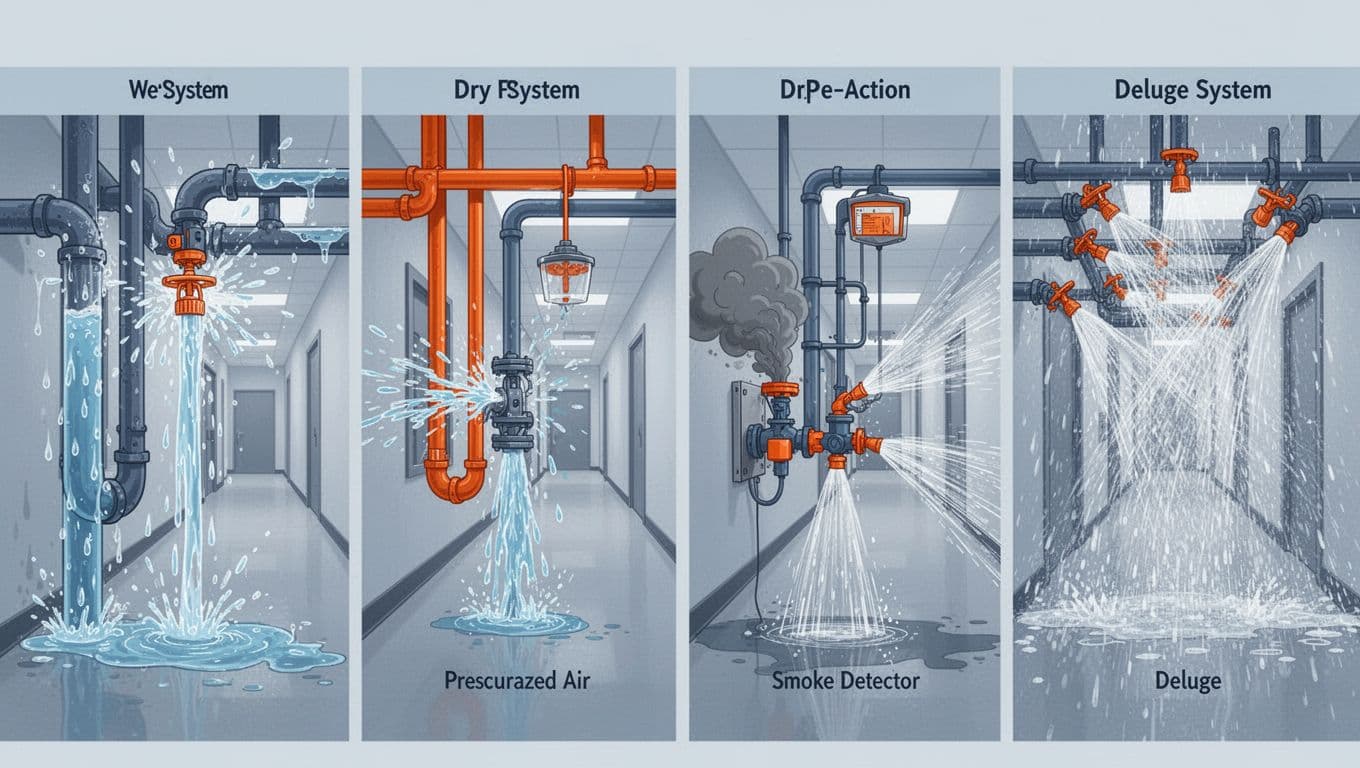
Sprinklers are the most common suppression method in commercial and residential buildings. Even then, not every sprinkler setup is the same. The system design changes based on freeze risk, water supply timing, and how much you want to prevent accidental discharge.
Start with the wet pipe system. Pipes stay filled with water under pressure. When heat activates a sprinkler, water sprays right away. That instant response is why wet systems are often the default. As a quick reference for how installers classify these systems, see sprinkler system types and use cases.
Next comes the dry pipe system. Here, air or nitrogen sits in the pipes, so water doesn’t reach the heads until a valve opens. Dry systems fit places where freezing temperatures are a concern. They add a step, so response time can differ from wet systems.
Then you have pre-action systems. They add a “double-check” approach: a detection step first, then water release. This design helps when you want to reduce unwanted water damage. It’s common in areas where a false discharge would cause expensive cleanup.
Finally, deluge systems release water across open nozzles, not individual heat-activated heads. They’re built for high-hazard, big-flash scenarios (often flammable liquid or high-rate fire loads). Because deluge systems can discharge heavily, the layout and control logic matter a lot.
Reliability pros for sprinkler systems often come down to this:
- Known trigger: heat-sensitive operation or defined detection logic.
- Proven hardware: long-used components and maintenance routines.
- Visible outcomes: water patterns help crews understand what happened.
The takeaway is straightforward: wet for direct speed, dry for freeze control, pre-action for reduced accidental discharge, and deluge when fire growth could be violent and fast.
Gas, Foam, and Mist Options for Special Spots
Not every hazard can rely on water alone. Sometimes water makes the situation worse, or it would ruin critical equipment. That’s where gas, foam, and water mist come in, each with a distinct job.
Gas suppression is often used where you want to protect items without wetting them. Clean agent gases work by reducing oxygen or interrupting combustion chemistry, depending on the agent type. This is common in server rooms and other areas where electronics and documentation matter. For spaces that cannot tolerate water damage, gas systems can offer a clean release that helps limit downtime.
Foam suppression is the go-to for flammable liquid and kitchen grease hazards. Foam blankets the fuel surface, so it slows vapor release and helps cool the situation. In kitchens, the goal often isn’t just “putting out flames,” it’s stopping flare-ups from hot oils. In other words, foam acts like a lid you can spread across the fire’s fuel path.
Water mist sits in a useful middle ground. It creates fine droplets that absorb heat and reduce steam and smoke effects. Mist can also work well in areas where full-flow sprinkler discharge would be too much. However, the system still needs correct design for nozzle placement, airflow patterns, and water supply performance.
Now, what about 2026 testing updates? The big one is NFPA 855 for energy storage systems, especially battery thermal runaway scenarios. Real-world testing increasingly requires large-scale fire testing concepts, with suppression options backed by hazard analysis and emergency planning. The standard also pushes for more verification of how suppression performs when batteries vent flammable gases. While NFPA 855 does not replace other suppression standards, it shapes how you prove that agents like mist or clean agents actually meet the risk level for battery fires. In other words, 2026 expectations tilt toward tested performance, not assumptions.
Here’s a practical way to choose the right suppression tool for the space:
- If water damage is unacceptable, consider clean agent gas solutions and verify room integrity needs.
- If the hazard is oily or liquid fuel-related, lean toward foam with proper application and coverage.
- If you need cooling and knockdown without heavy wetting, evaluate water mist with correct design density and coverage.
For a helpful plain-language comparison of agent behavior, timing, and typical use cases, see clean agent suppression vs water mist.
Alarm Systems: Loud Warnings That Get People Moving
Alarm systems are the moment the fire protection system stops being “equipment” and starts being instructions. Detection equipment spots the problem, then notification appliances push a clear message through the building.
In real life, people respond to patterns. They move toward exits when they hear consistent alarms, see strong strobe lights, and understand what the building wants them to do. That’s why the alarm side matters as much as the detectors.
From Basic Beeps to Smart Voice Alerts
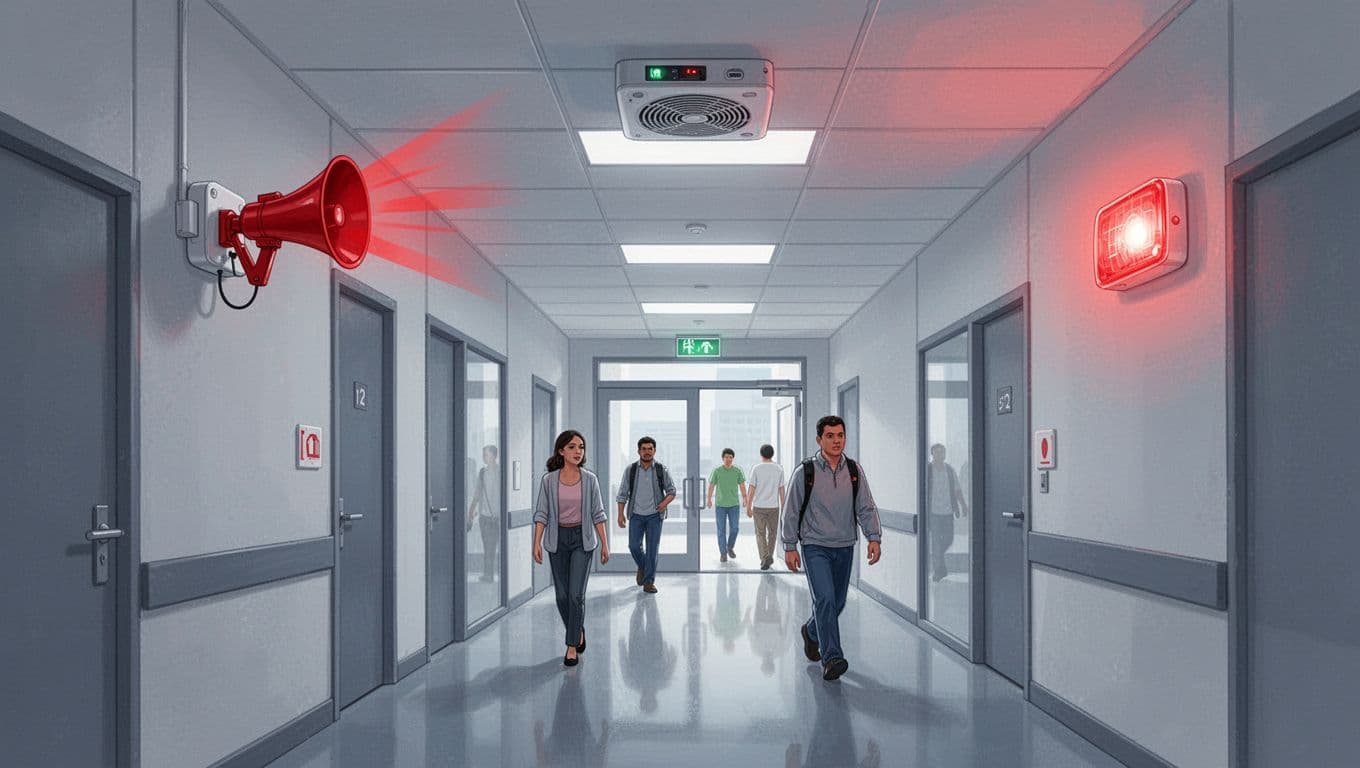
Not every alarm sounds the same, and that’s the point. Modern fire notification covers a range of sound and light methods, from simple tones to addressable voice prompts. Each option has strengths, especially in spaces with crowds, noise, or complex layouts.
Here are the main notification styles you’ll see in the field:
- Conventional (zone) alarms: These group the building into zones. When a zone trips, the panel activates the notification devices in that zone. It’s a workhorse approach for simpler layouts.
- Addressable alarms: These identify the exact device or location that triggered. That detail helps maintenance crews find the issue faster, and it also supports more precise alerting strategies.
- Wireless alarms: These use radio paths instead of hardwired circuits. They help when you need faster retrofits or when adding wiring would cost too much.
- Hybrid systems: These mix wired and wireless devices in one platform, so you can design for coverage without forcing a single installation method everywhere.
- Voice alarms: These deliver spoken instructions over speakers. In practice, voice alerts cut through confusion because people hear what to do next, not just that they should move.
You can also think of it like this: basic alarms are a loud siren, while voice alarms are a guided evacuation. For example, a school might use tone-only alerts for general fire conditions, then switch to voice messaging like “Exit now, use the nearest stair.” Meanwhile, a mall may prefer voice cues so people can follow directions in busy corridors.
Modern NFPA 72 updates also push notification quality, especially for systems connected to networks. For a clear view of the direction, see NFPA 72 changes for 2026. These updates also reinforce cybersecurity needs for alarms that can integrate with building systems, including elevator recall and emergency lighting control.
In short, the louder your alarm is, the less help it needs. Yet the more complex the building, the more value you get from addressable control and voice instructions. When the system can tell people exactly where to go, you often see faster escapes and fewer injuries.
Control Systems and Panels: The Smart Hub Running the Show
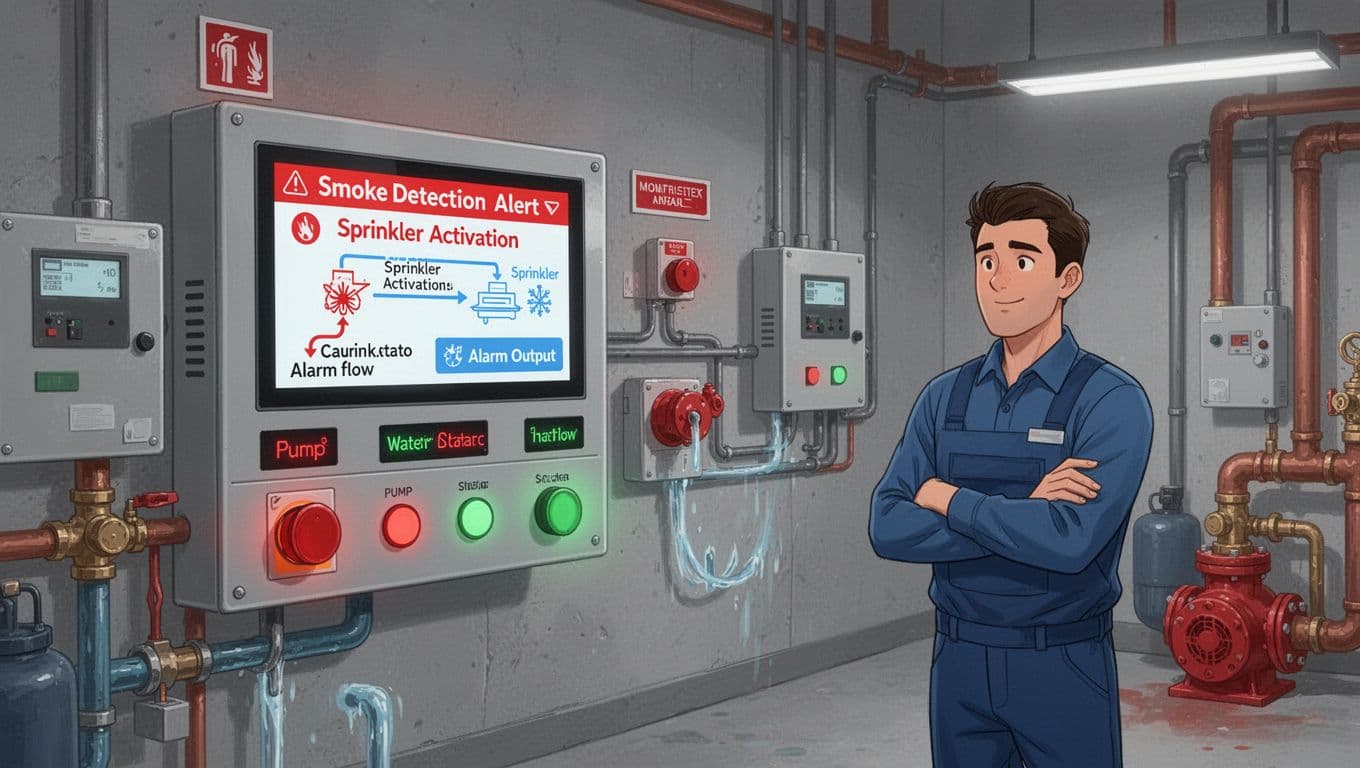
Control systems and panels are the fire protection system’s brains. When a detector senses heat, smoke, or flame, the panel reads that signal and turns it into real-world action. In other words, it doesn’t just “notice” the problem, it coordinates what happens next.
Think of the panel like a conductor. It gets the first cue, then cues the orchestra: alarms, suppression, shut downs, and alerts. Without that control layer, devices would act out of sync, or you would only get part of the response you need.
What Panels Do During a Fire
During a fire, panels do three big jobs in rapid order: detect the input, match it to a programmed response, and confirm outputs are doing their work. The timeline matters. Seconds can decide whether you get fast control or costly damage.
First, the panel reads the detector’s status. If you have an addressable system, it usually knows the exact device or location. Next, it decides which actions should run based on the system’s programming and the type of fire alarm condition.
Then, it links detection to suppression and alarm outputs. For example, once the panel recognizes a fire alarm, it can:
- Trigger alarm notification (horns, strobes, and speakers).
- Initiate suppression control circuits, such as releasing systems or starting the right valves.
- Start or control pumps, including commands that support water flow to sprinklers or standpipes.
Water flow is a key point. In many buildings, pump systems do not just “start and hope.” They follow strict sequences, like starting pumps, checking pressure, and confirming flow switches and valve positions. That’s why the control panel’s logic often pairs the fire signal with feedback points, like supervisory switches or flow confirmations.
At the same time, panels manage building interfaces. They may send signals that shut down fans, release door hold-open devices, or support emergency procedures. If your system integrates with monitoring, the panel also reports the alarm state so off-site teams can react.
Finally, reliability checks protect you after the event too. NFPA 25 focuses on inspection, testing, and maintenance of water-based systems, and the 2026 edition adds tighter attention to pump readiness during checks. In practice, that means the panel, pumps, and water supply components stay “test-proven,” with records that show they can perform when they must. For a clear, plain-English overview of how control panels tie inputs to outputs, see Fire Alarm Control Panels: A Quick Start Guide.
Passive Protection: Hidden Barriers Stopping Fire Spread
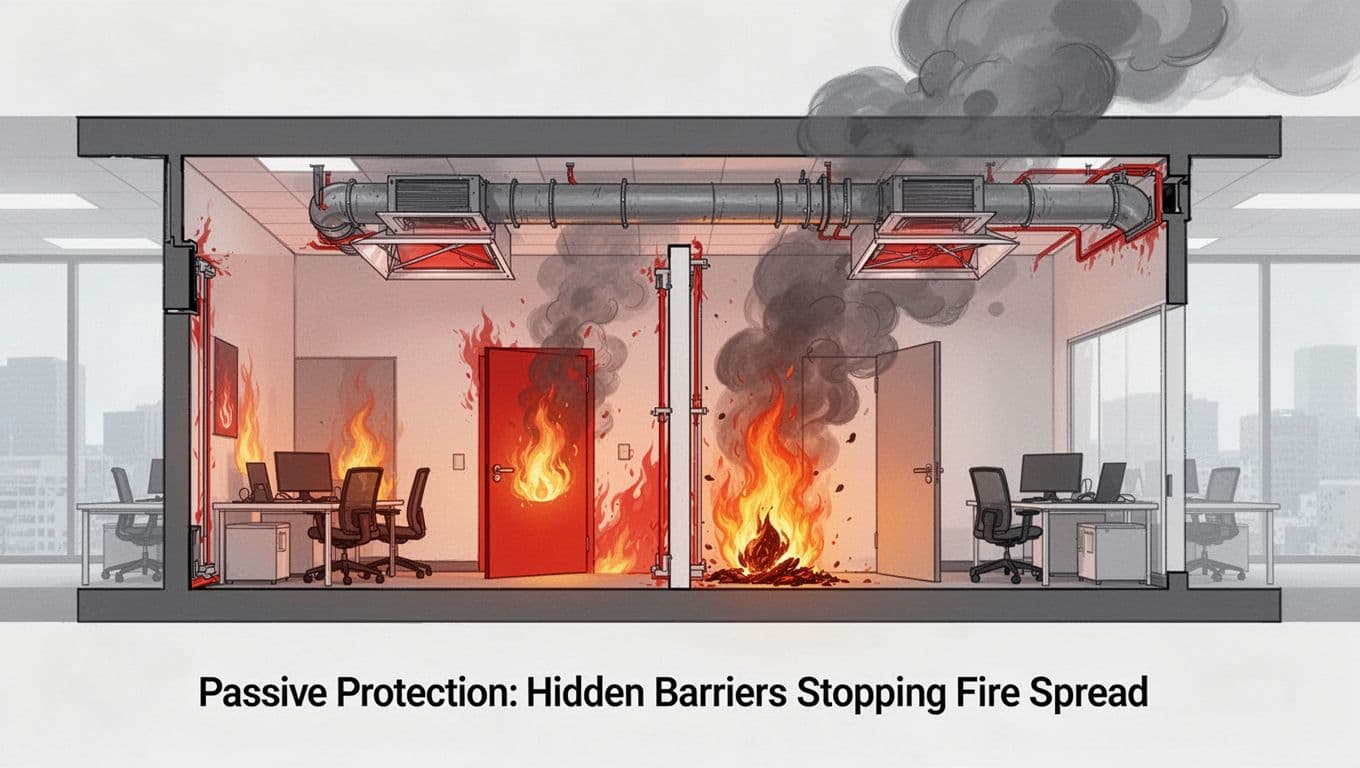
Active systems grab attention when things go wrong. Passive protection works quietly in the background, buying time by keeping fire in one place. Think of it like a set of walls in a snow globe. You might still see movement, but the mess stays contained long enough for people to react.
In most buildings, the goal is simple: delay the spread of fire, smoke, and heat. Fire rated compartments do this by limiting how flames and hot gases move through openings, joints, and paths between rooms.
Doors, Walls, and Seals That Hold the Line
Doors, walls, seals, and dampers form the “shell” of passive fire protection. They don’t spray or sound alarms. Instead, they slow heat transfer and block airflow, which is what often fuels fire growth.
Fire doors are the most visible passive barrier. They must close fully and latch the same way every time. For practical inspection and install details tied to NFPA guidance, see fire door protection basics. When installing, focus on these points:
- Use the correct door assembly (door, frame, hardware, and rating must match).
- Keep the clear gap at the bottom consistent with the listing.
- Install and test closers, latches, and smoke seals so the door shuts reliably.
- Don’t mix parts from other assemblies. A “close enough” hinge can ruin performance.
Fire rated walls and partitions do the heavy lifting. Still, the wall is only as good as its weakest spot. Joints, openings, and service penetrations often become the leak in the dam. Installers should:
- Seal joints using the approved system for that wall type.
- Confirm penetrations are firestopped by a tested method (not random caulk).
- Maintain the wall’s rating at door frames, intersections, and slab penetrations.
Seals and firestopping materials handle the small stuff that causes big spread. Intumescent sealants and firestop putty expand when heated, which can close gaps created by smoke and heat. Make sure contractors use the right material for the surface, depth, and penetrant type.
Finally, don’t forget fire dampers in ductwork. Dampers close to stop smoke and flame from traveling through HVAC routes. Installation errors can keep them from closing when needed. For a field-friendly reference on types and inspection expectations, check fire damper inspection and servicing.
One more detail matters: passive systems only perform if they stay intact. After any maintenance, ask whether openings were restored to the original firestop design.
How All Parts Team Up Plus Maintenance Must-Dos
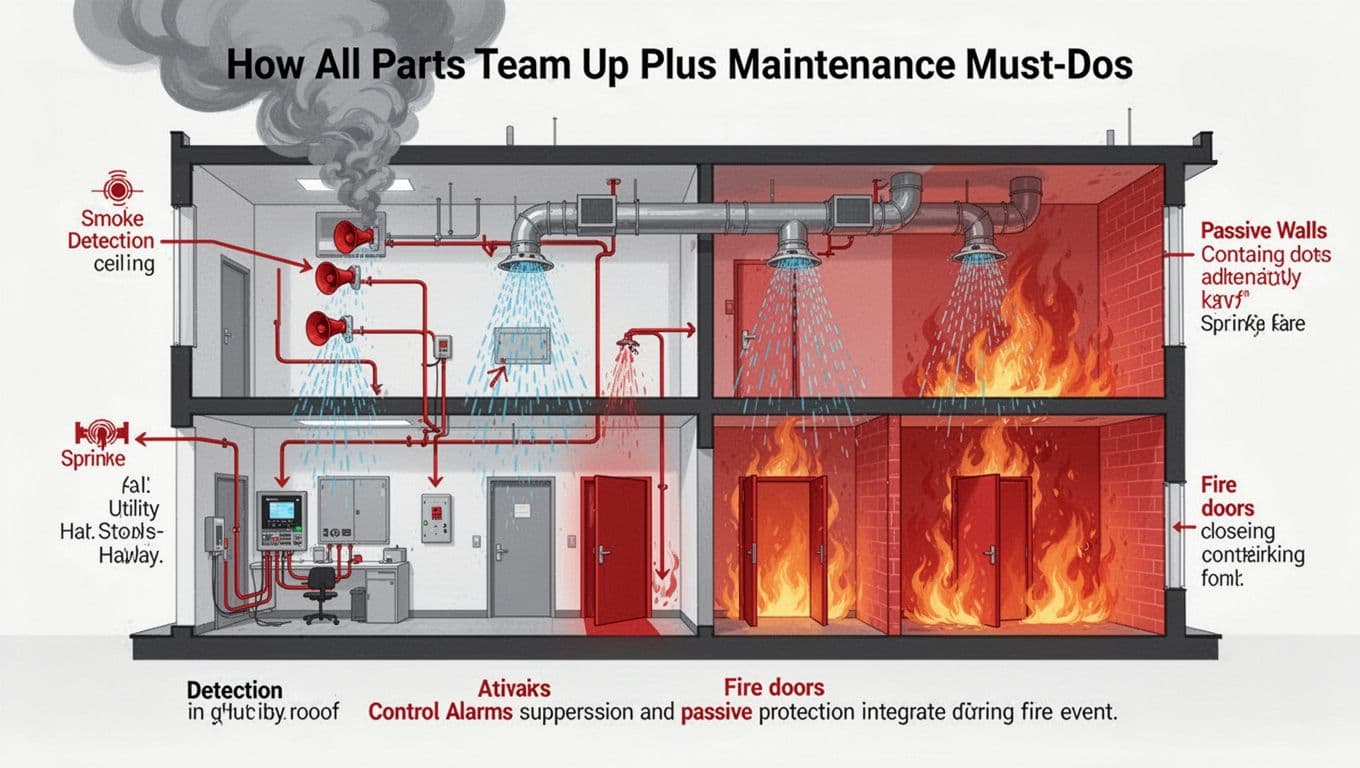
A working fire protection system feels coordinated, almost like it rehearsed. Detection spots the first clues, then the control layer turns those clues into actions. After that, suppression and passive protection work together to slow the fire down. If any part gets ignored, the whole chain weakens.
So, don’t think of these components as separate boxes on a plan. Think of them as a team in one play. Detection starts the play, the panel calls the shots, suppression fights, and passive barriers keep damage from spreading while people escape.
The integrated flow that has to work every time
Here’s the simple sequence that matters most: detect > alarm/control > suppress/passive. Fire codes expect that flow to connect, not just exist on paper.
First, detection captures the event. Smoke detectors, heat detectors, or flame detectors send an input to the panel. Then alarm notification and control happen. The control system decides what to activate, where to activate it, and how to confirm it worked. In many buildings, this also triggers building interfaces, like door control or fan shutdown.
Next comes suppression. Sprinklers, clean agent releases, foam, or water mist start when the system reaches the programmed conditions. Finally, passive protection limits the fire’s path. Fire-rated walls, fire doors, fire dampers, and firestopping slow the movement of flames and hot gases.
When this flow works, people get warnings early, fire growth slows quickly, and smoke stays where it should. When it fails, you might still get a local device alarm, but the building response lags. That delay can cost more than the fire itself.
The system’s “job” is not to react loudly. It’s to react correctly, at the right time, in the right zones.
Why zoning and timing decide how well people escape
Alarm devices and control logic should match how people actually move through your building. A system that notifies the wrong area can create confusion fast. On the other hand, a system that identifies the right zone helps people head for exits without second-guessing.
Timing matters because evacuation is not instant. Even calm people need clear cues. Horns and strobes grab attention, but voice alarms can also guide behavior in larger spaces. In busy buildings, addressable systems help pinpoint the triggering location. Crews and maintenance teams can then respond with less guessing.
Also, control panels often manage sequencing to avoid crowd noise overload or to coordinate with other life safety functions. For example, the system might:
- Sound alarms in the affected zone first, then extend as the event grows
- Send signals that support elevator recall and emergency operations
- Coordinate door controls and smoke control interfaces (where installed)
If you review your layout, ask one practical question: does the alarm strategy match where smoke and heat would travel? If it doesn’t, the system might still comply, but it may not perform the way you expect in real life.
How code expectations shape a “full system,” not just parts
A fire protection system becomes “full” when it’s maintained and tested as a connected setup. Codes treat it like an interlocked chain. You can’t swap out a component and assume the rest still works.
NFPA standards typically cover the components in separate documents, but real compliance relies on consistent outcomes across the chain. That’s why you see emphasis on inspection, testing, and maintenance (ITM).
For water-based systems, NFPA 25 is the core reference for inspection and maintenance expectations. You can reference the standard directly through NFPA 25 (2026). For the wider fire alarm system side, NFPA 72 governs alarm and signaling performance and related testing patterns.
As 2026 updates roll in, more owners need to treat maintenance like a scheduled routine across devices, not “whatever is convenient.” Changes tighten inspection and testing intervals for certain devices, and they also emphasize proper records and integrated operation. In short, codes want proof that the system will do what it’s designed to do.
For a straight look at NFPA 25 updates and how they affect programs, NFPA LiNK 2026 NFPA 25 is a helpful starting point.
Maintenance must-dos that keep the chain from breaking
Maintenance is where systems win or lose. Hardware can look fine yet fail under real conditions. Over time, batteries drift, valves stick, dust blocks visibility, and doors get held open. That’s why ITM isn’t optional in practice, it’s part of the system’s safety design.
Also, maintenance needs to stay tied to the system design. If someone changes HVAC airflow, adds ceiling tiles, or relocates equipment, your detection and suppression coverage can change too. After physical changes, you should treat it like a mini re-commissioning.
For 2026-era expectations, focus on four must-dos:
- Keep test intervals current. Semiannual and annual schedules vary by device type. Don’t guess, follow the applicable standard for the system.
- Test connected outputs, not just inputs. A detector might alarm, but did it trigger the right notification pattern and control outputs?
- Verify water-based reliability. For sprinklers and related water supplies, check waterflow alarm operation, valves, and pump readiness when required.
- Protect the records. You need logs that show what was done, when it was done, and what the results were. Missing records often cause more problems than minor findings.
NFPA 2026 updates also put extra emphasis on integration and documentation, including cybersecurity controls where networked alarm components exist. That matters because a “safe” system can still fail if it cannot communicate as intended.
If you want a practical industry lens on ITM, Sprinkler Systems Don’t Fail—Programs Do explains why maintenance programs beat “set it and forget it” thinking.
What homeowners and business owners can check right now
You might not do code-level testing yourself. Still, you can catch red flags early. Think of this like checking smoke alarms in a kitchen before you smell gas. Small checks prevent bigger failures.
Start with what you can observe safely:
- Look for disabled alarms or missing devices. If someone bypassed a unit, fix it fast.
- Watch for damage signs. Water stains, repeated false alarms, or loose covers can point to trouble.
- Confirm panel trouble indicators stay cleared. If you see a persistent trouble light, address it quickly.
- Check fire doors daily-use basics. Doors should close fully. Hold-open devices need proper release behavior when installed.
- Maintain clear paths around detectors and devices. Don’t block sprinklers with storage, and don’t cover alarm appliances.
For business owners, add a simple operational rhythm. Assign one person to request maintenance records and test summaries. Then compare them to what you have on your building’s system schedule.
Finally, make sure any vendor work connects back to the fire system. If contractors move ceiling tiles, run new cable trays, or modify HVAC routes, ask how it affects detection, firestopping, and dampers. Systems don’t live in isolation, and your building changes can break the chain without anyone noticing at first.
Conclusion
A reliable fire protection system depends on five parts working together: detection, alarm notification, control, suppression, and passive fire barriers. When those components match the hazard and the building layout, the system can spot danger early, warn people fast, and limit fire growth before it spreads.
That is why maintenance matters as much as design. Inspect and test on schedule, follow your local fire code requirements, and call qualified pros when anything looks off, especially alarms, suppression piping, and fire doors or firestopping.
If you want the biggest results, plan for the full chain, detection through containment, not just one or two devices. Share this post with your team, or comment with your setup questions, what type of building you have, and what you want to improve.
Good systems help most fires end quick, with less harm and less damage.