A small office fire can go from “smoke on the ceiling” to a full problem fast. One right grab and the right fire extinguisher types can stop it early.
But here’s the tricky part. Not every extinguisher works on every fire. If you pick the wrong one, you can waste time or even make flames spread.
That’s why understanding the types of fire extinguishers used in buildings matters for offices, kitchens, garages, and other shared spaces. Fire safety labeling uses fire classes (A through K) to match the extinguisher to what’s burning. In the US, the most common building choices often center on A, B, and C hazards, with special options in kitchens and workshops.
If you want the simple version, focus on the main class system and the agent inside each extinguisher. Then you can choose correctly, train people faster, and keep everyone safer.
Next, you’ll learn what fire classes mean in plain language, then which extinguisher agents are used most in buildings, and finally where to place them in real rooms.
Understand Fire Classes to Pick the Right Extinguisher
Fire classes describe the fuel source. That fuel decides how a fire behaves and what puts it out.
In most buildings, you’ll see marking for Class A (trash and paper), Class B (flammable liquids and grease), and Class C (electrical equipment). Special risks show up in kitchens and industrial spaces, too.
A quick way to remember it is this: the extinguisher works best when it matches what’s burning, not what you “hope” is happening.

Here’s a building-friendly cheat sheet:
| Fire class | What’s burning | Common extinguisher choices |
|---|---|---|
| Class A | Paper, wood, cloth, trash | Water, foam, ABC dry chemical |
| Class B | Oils, gasoline, paints, solvents | Foam, dry chemical, CO2 |
| Class C | Live electrical equipment, wiring | Dry chemical or CO2 |
| Class D | Combustible metals (industrial labs) | Dry powder for metals |
| Class K | Cooking oils and fats (commercial kitchens) | Wet chemical (Class K) |
Most offices and retail areas mainly need ABC coverage. That’s why many buildings mount ABC extinguishers in hallways, break rooms, and near common hazards.
If you want a plain-language refresher on how classes connect to extinguishers, this guide on fire extinguisher types and classes is easy to follow.
Class A: Everyday Combustibles Like Paper and Wood
Class A fires involve regular stuff you find every day. Think paper, cardboard, wood, cloth, and many types of trash.
These fires tend to burn with steady heat and produce lots of embers. Because of that, the best agents usually cool the fuel or coat it to slow the burn.
In buildings, Class A shows up in lots of normal places:
- Office paper and packaging
- Hallway trash and recycling
- Waiting rooms and closets
Water is a classic Class A choice. Foam also works well, since it blankets burning materials. In many buildings, ABC dry chemical handles Class A too, which makes it popular for mixed risks.
If an office has mostly “normal materials,” Class A coverage is the baseline. However, you still need to consider nearby hazards like lamps, computers, or spilled solvents.
Class B: Flammable Liquids Such as Gasoline and Grease
Class B fires come from flammable or combustible liquids. That includes gasoline, diesel, oils, paint, solvents, and other petroleum-based products.
In a building, Class B often appears in:
- Garages (fuel and stored chemicals)
- Maintenance rooms (solvents and oils)
- Break rooms (grease around fryers or cooking areas, depending on the space)
Grease and oil fires can spread fast. Flames also get hotter when a liquid keeps feeding the burn.
For Class B, the best extinguisher depends on what’s burning and where it is. Foam can smother liquids. Dry chemical can interrupt the flame reaction. CO2 can work for flammable liquids, though it’s not ideal for deep or large fires.
This is why garages and storage areas often require agents beyond plain water. For a commercial-focused view of matching extinguishers to property needs, see how to choose the right extinguisher for commercial spaces.
Class C: Live Electrical Equipment and Wiring
Class C is about live electrical equipment. That means the hazard is energized wiring, outlets, appliances, and electrical panels.
Here’s the practical rule: you generally don’t want to use water on live electrical gear. Water can conduct electricity.
Instead, most Class C protection in buildings uses agents that work on the flames without encouraging shock risk. Dry chemical and CO2 are common because they can stop the fire while you keep distance.
You’ll see Class C hazards in:
- Office spaces with computers and chargers
- Copy rooms and server closets
- Hallway lighting and ceiling fixtures
In many buildings, an ABC extinguisher also covers Class C. That overlap is a big reason ABC is so common.
Class D and K: Special Fires for Metals and Cooking Oils
Class D and Class K are special cases. They show up in specific areas, not every office.
Class D involves combustible metals. In the real world, that’s more common in labs and industrial workshops. Metals like magnesium need a dedicated approach because most common agents can’t handle their burning behavior.
Class K involves cooking oils and fats, usually in commercial kitchens. These fires often occur around deep fryers and restaurant-style cooking. Standard dry chemicals can create problems with grease and re-ignition.
That’s why Class K extinguishers use wet chemical agents designed for hot cooking oils. They help control the fire and reduce the chance of flashback.
Most standard commercial buildings don’t need D and K in every wing. Still, if your building has a lab or a real kitchen, you need the right agent nearby.
Common Fire Extinguisher Types and How They Work
Fire extinguishers don’t just spray randomly. Each type uses a specific method to stop the fire.
Most agents work through one or more of these ideas:
- Cooling the burning material
- Smothering the flames by blocking fuel or oxygen
- Interrupting the chemical reaction
- Displacing oxygen (in some gas-based extinguishers)
In the US, extinguishers often include a letter rating (like ABC). That rating tells you what classes they cover.
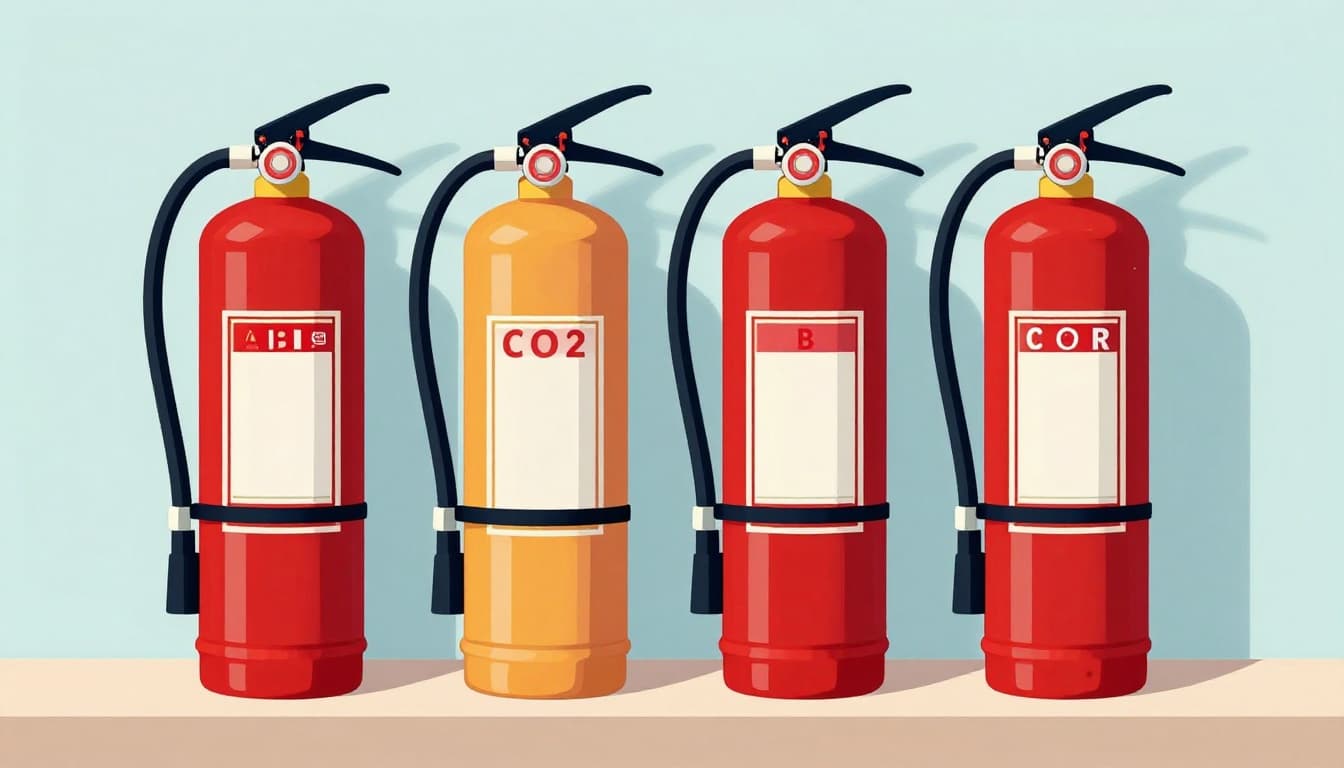
Here’s a quick comparison of the main agents you’ll see in buildings:
| Extinguisher type | Typical class coverage | Works by | Main drawback |
|---|---|---|---|
| Water (straight) | A | Cooling | Not for grease or live electrical |
| Water mist | A, and sometimes B/C | Cooling with mist | Range can be limited |
| Foam | A, B | Coats and smothers | Can be messy and may be limited indoors |
| ABC dry chemical | A, B, C | Interrupts flames | Cleanup is messy |
| BC dry chemical | B, C | Interrupts flames | Won’t cover common trash fires |
| CO2 | B, C | Displaces oxygen | Short range, no cooling |
| Wet chemical | K (also some A) | Coats hot oils | Needs training and kitchen placement |
| Dry powder (metals) | D | Specialized reaction | Usually for industrial sites only |
| Clean agent (varies) | Often B, C | Leaves minimal residue | Costs more, smaller volume |
If you only remember one thing: ABC dry chemical is the most common “covers a lot of bases” option in US buildings.
Dry Chemical ABC: Your Go-To for Most Building Fires
An ABC dry chemical extinguisher releases powder that smothers the fire and interrupts the chemical reaction.
That’s why it’s used in offices, warehouses, schools, and many mixed-use buildings. It can handle typical paper and wood (Class A), flammable liquids and grease (Class B), and live electrical equipment (Class C).
The tradeoff is cleanup. The powder gets everywhere. After a discharge, you often need to protect equipment, floors, and surfaces during cleanup.
Still, for early-stage fires, ABC is a strong fit. Many building managers choose it because it covers more than one hazard in a single extinguisher.
In practice, staff training matters as much as the label. People still need to know when to pull the pin, when to aim, and when to evacuate.
CO2 and Clean Agents: Clean Options for Electrical Areas
CO2 extinguishers push carbon dioxide out under pressure. The gas reduces oxygen around the flame, so the fire can’t keep burning.
One benefit is cleanup. CO2 leaves little residue compared to powders. That makes it attractive for offices with sensitive electronics.
However, CO2 has limits:
- It can have a short reach.
- The fire can restart if you don’t apply enough agent.
- It doesn’t cool like water.
Clean agent extinguishers work in a similar “leave minimal residue” way. Their main strength is reduced mess and faster cleanup after discharge.
That said, these options can be more expensive. Many buildings choose CO2 or clean agent only in tighter electrical areas.
Wet Chemical and Foam: Kitchen and Liquid Fire Heroes
Wet chemical extinguishers are designed for Class K cooking oil fires. They create a foam-like layer that helps prevent re-ignition.
In a real kitchen, the best extinguisher is the one that’s ready at the moment grease starts to flare. Placement and access matter as much as the rating.
Foam extinguishers help with many Class B liquid fires. They coat the fuel surface and block oxygen.
These are common in maintenance areas and around flammable liquid risks. In kitchens, wet chemical is usually the must-have. In garages, foam can be part of the answer, along with ABC dry chemical.
If you’re choosing extinguishers for a kitchen, don’t “guess” with an office extinguisher. Get Class K coverage where cooking oils are present.
Where to Find Fire Extinguishers in Different Building Areas
You could buy the perfect extinguisher and still fail if it’s hidden, blocked, or missing from the right room. Location and visibility are part of the safety equation.
In general, extinguishers should be placed where people can reach them fast. They also need to be near exits, so people can use them while moving to safety.
NFPA 10 is the key reference for portable extinguisher installation, placement, inspection, and maintenance. It’s widely adopted by authorities with local enforcement power. For a clear summary of what NFPA 10 covers, see NFPA 10 installation and maintenance overview.
Also, OSHA covers fire protection responsibilities through workplace rules. If you want the OSHA baseline for fire protection, check OSHA’s fire protection standard (1926.150).

Offices and General Spaces
Offices usually need ABC extinguishers because the fire risks mix often. You get paper, plastics, desk items, and small electrical equipment.
Mount them where staff can access them quickly:
- Near hallways and main corridors
- In or near break rooms
- Near rooms with printers, chargers, or shared electronics
Keep them away from clutter. A blocked extinguisher is the same as no extinguisher.
In mixed-use buildings, ABC also helps with day-to-day uncertainty. It covers Class A, B, and C hazards that show up in normal work.
Commercial Kitchens and Food Prep Areas
Kitchens require the right agent for cooking oils and fats. That usually means Class K (wet chemical) extinguishers placed near the cooking equipment.
Many kitchens also keep ABC units nearby for general combustibles and spills. Still, the kitchen’s “center stage” extinguisher should match the grease risk.
Watch for blocked routes. Kitchen traffic moves fast, and carts can block access.
If you run a real food operation, treat extinguisher placement like part of your workflow. People should know where it is before the first alarm.
Garages, Workshops, and Maintenance Rooms
Garages often include fuel, oils, solvents, and power tools. Because of that, these spaces commonly use ABC and sometimes add CO2 or BC depending on the setup.
If you store flammables, ABC can cover many early-stage liquid and electrical ignitions. If you have a strong electrical hazard mix, CO2 may show up for reduced mess.
In workshops, the goal is simple: cover common combustibles, cover flammable liquids, and cover electrical risks.
Pros, Cons, and Following Safety Standards
Different agents have different tradeoffs. The best choice is the one that fits your building hazards and your staff’s ability to use it.
Here’s the reality check:
- Water is cheap and good for Class A, but it can be wrong for grease and live electrical fires.
- Dry chemical covers a lot and works fast, but cleanup is messy and powder can harm some equipment.
- CO2 is clean for electrical areas, but it often has a short reach and doesn’t cool well.
- Wet chemical (Class K) shines for cooking oils, but it belongs near kitchens, not in general hallways.
Standards keep this from turning into guesswork. NFPA 10 lays out selection, placement, inspection, maintenance, and recharging rules.
In March 2026, NFPA 10 includes major changes focused on how inspections can be tracked. The big shift is that electronic monitoring systems can supplement some manual checks, as described in the latest updates. Manual inspections still apply until state and local authorities adopt the 2026 edition.
Training matters, too. When an emergency hits, people freeze. That’s why practice and clear steps count.

A common method to remember is PASS:
- Pull the pin.
- Aim at the base of the fire.
- Squeeze the handle.
- Sweep side to side.
If you want a US-based NFPA 10 reference page for installation and inspection context, see NFPA 10 requirements for portable extinguishers.
Conclusion
Fire extinguishers aren’t one-size-fits-all. The types of fire extinguishers used in buildings depend on fire classes, the agent inside the canister, and where people can grab it fast.
If you remember just one theme, make it this: match the extinguisher to the hazard. ABC solves a lot of everyday office problems, while kitchens need wet chemical Class K for cooking oils.
Then keep it safe with regular inspections and real training. Check your extinguishers today, confirm the labels match your rooms, and teach staff the PASS steps.
Because the right choice at the right time can stop a small fire before it becomes a crisis.