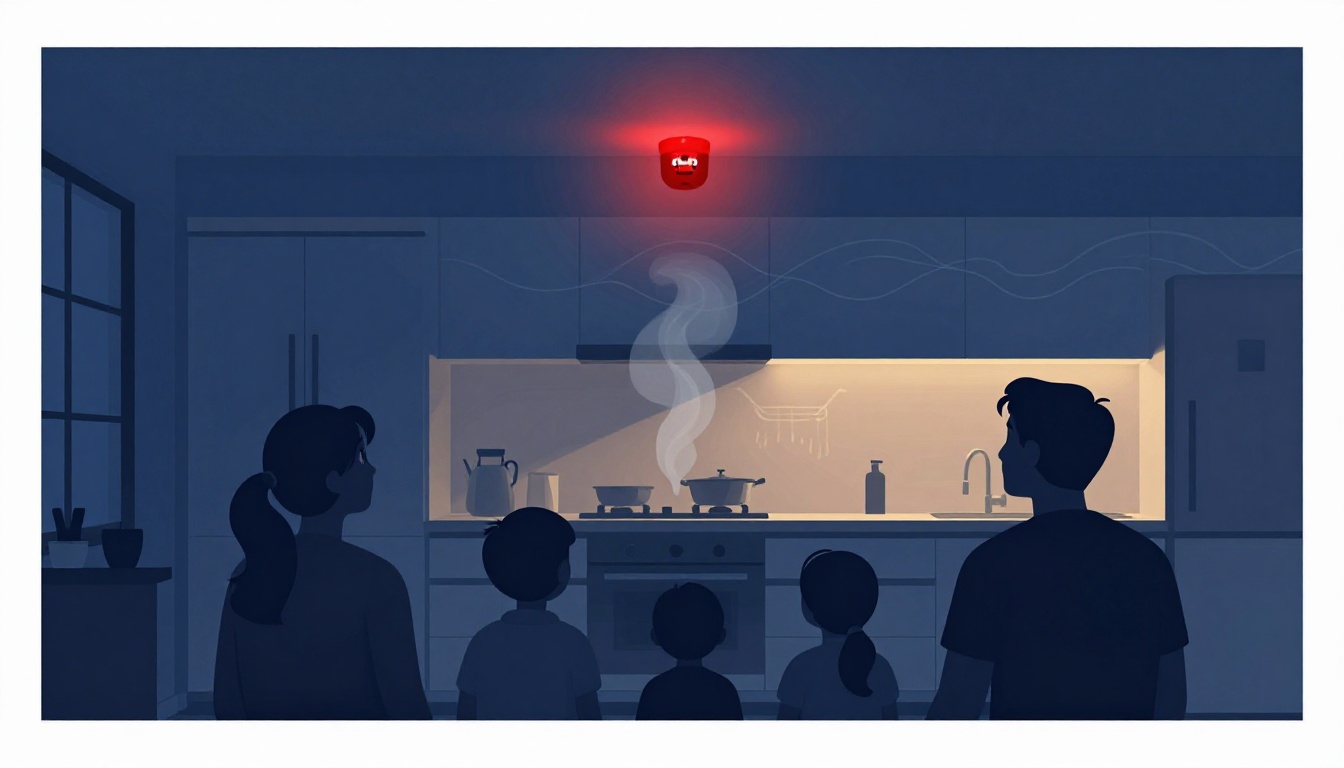
One night, a family in a small home smelled something “off.” Then their fire alarm systems detect emergencies, started screaming, and woke everyone up fast. They found a pot left on the stove, and the fire stayed small.
That’s the whole point. Fire alarms don’t just ring when something is already huge. They try to spot early danger, then push a clear warning to you and nearby people.
Knowing how fire alarm detection works helps you choose the right setup. It also helps you understand why some alarms miss a slow smolder, while others react quickly to flaming heat.
In the sections below, you’ll learn how detection devices sense smoke, heat, flame, and carbon monoxide. You’ll also see what the key parts do together, how newer tech reduces false alarms, and what to check so your system stays ready.
The Essential Parts That Power Fire Alarm Detection
A fire alarm system is teamwork. One part “sees” smoke or heat. Another part “thinks” and decides when to alert you. Then notification devices “shout” through sound and light.
Start with the sensors, often called detectors. They sit in ceilings, hallways, and key rooms. Each detector watches for specific signs of fire, like smoke particles or heat changes. Because detection depends on what the detector senses, the type you install matters.
Next comes the control panel. Think of it as the brain. It constantly polls detectors for status signals. If a detector goes out of normal range, the panel checks the system logic. After that, it triggers an alarm condition.
Then you have notification devices. These include sirens, strobes, and sometimes voice messages. If you live in an apartment or office, you want both sound and visual alerts. That way, more people can react, even if they are asleep or hard of hearing.
Power is another big piece. Fire alarms include a main power source, plus a backup battery. Power interruptions happen, especially during storms or construction. Backup power helps prevent “silent failures” when you need the alarm most.
Finally, there’s wiring or wireless communication. Wired systems send signals through loop circuits. Wireless systems use radio links to report detector states to the panel.
If you want a simple walkthrough of how smoke and heat components work together, see how smoke and heat detectors work.
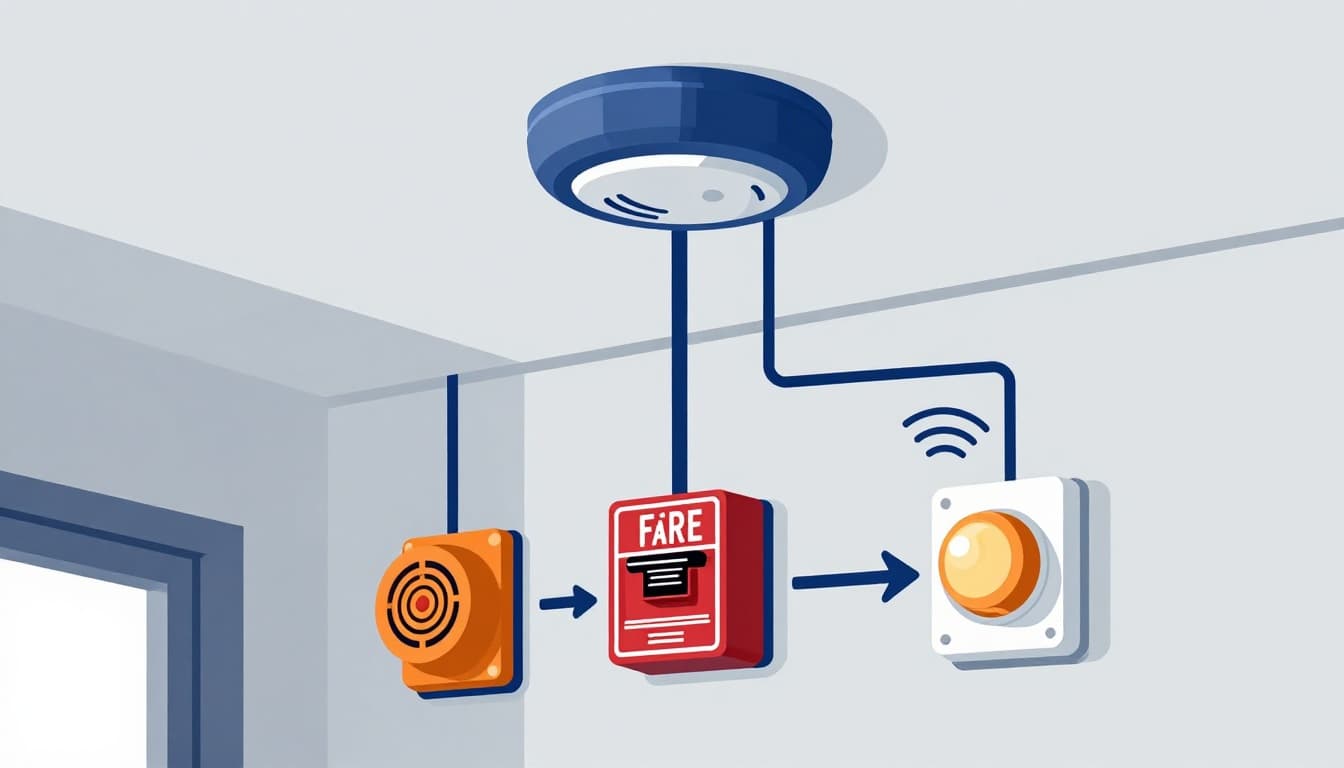
One more detail: many systems now include connected features (often called IoT). That can mean phone alerts, remote status checks, and sometimes links to building controls. Still, the core job stays the same. Sensors detect, the panel decides, and alarms notify.
That’s why maintenance matters. If dust blocks a detector or a battery fails, the team can’t react in time.
How Smoke Detectors Spot Fires Before They Spread
Smoke usually shows up before flames fully take over. So smoke detectors are common in homes and businesses. Still, not all smoke detectors respond the same way.
Some detect fast, flaming fires. Others catch slow, smoldering threats. In real life, you want coverage across both types.
Here’s the basic idea. A detector either senses smoke by light behavior or by ionization effects. After enough change, it sends an alarm signal to the control panel.
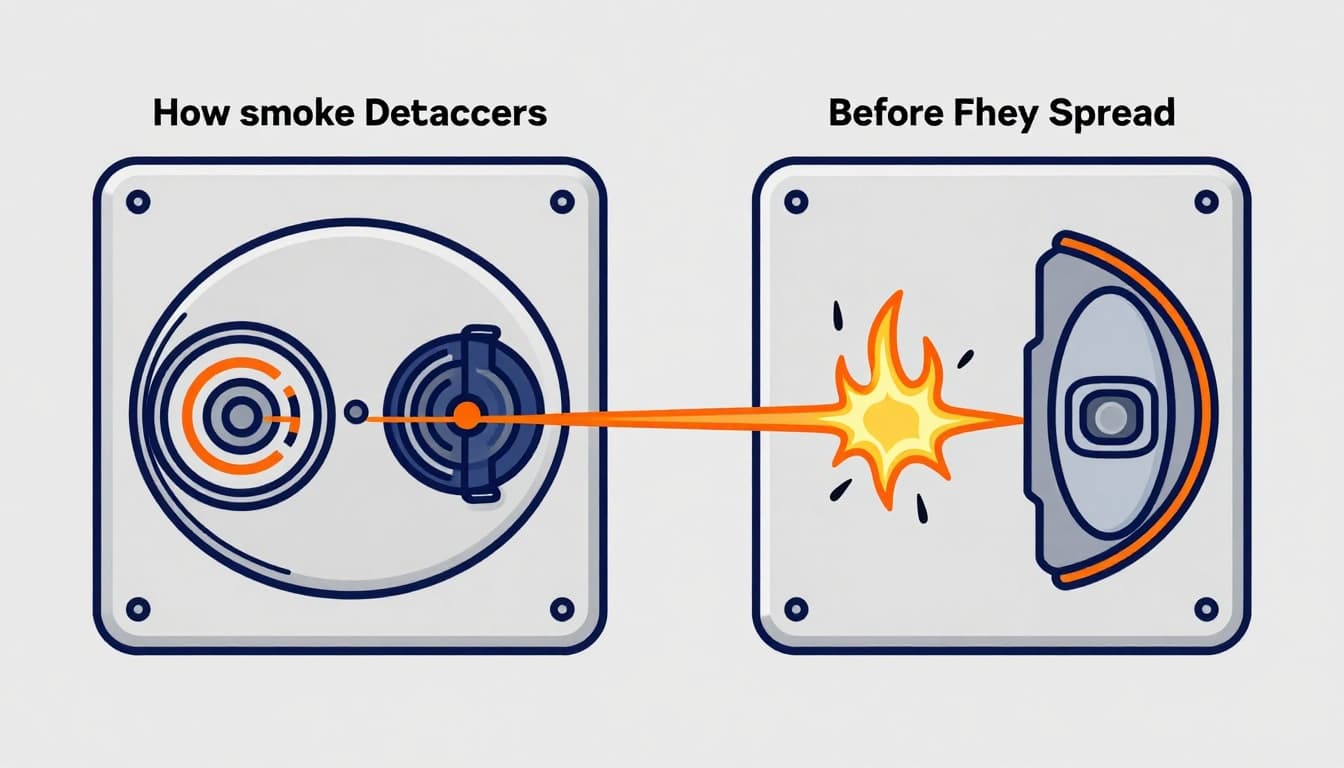
For many households, a strong choice is dual-sensor protection. One reason is simple. You reduce the chance that one fire type slips by. Dual-sensor smoke alarms are a common recommendation, and you can read about how they work in dual sensor smoke alarms.
Ionization Smoke Detectors in Action
Ionization smoke detectors use a sealed chamber with a small amount of radioactive material. Inside, ions help conduct electricity between two points.
In clean air, the ion flow stays stable. When fast, flaming fires produce smoke, those particles disrupt the ion current. The detector notices the change and signals the alarm.
In everyday terms, it’s like a guard checking a narrow hallway. Fast-moving smoke “throws off” the measurement sooner. That’s why ionization types often respond quickly to open flames and paper fires.
However, ionization detectors can be sensitive to conditions that create small bursts of smoke or changes in air movement. Cooking aerosols and high humidity can sometimes trigger false alarms. Good placement helps, too.
Photoelectric Detectors for Smoldering Threats
Photoelectric smoke detectors work differently. They use a light source and a sensor. When smoke enters the chamber, it changes how light travels.
If smoke is present, it scatters light. The sensor detects that scattered light, then the detector alarms.
This approach often performs well for smoldering fires, like furniture, mattresses, or electrical insulation that smolders before it bursts into flames. It can also mean fewer alarms from normal cooking, compared to some ionization setups, depending on design.
A good way to picture it: imagine a flashlight aimed into a box. In clear air, the beam stays steady. With smoke, the beam “breaks,” and the sensor sees the change.
Advanced Smoke Tech Like Aspirating Systems
In some large spaces, standard detectors may not react early enough. That’s where aspirating smoke detection can help.
Instead of sensing smoke at a fixed point, aspirating systems draw air through small pipes to a central detector. Because they sample air continuously, they can detect smoke particles extremely early.
You’ll more often see these systems in warehouses, clean rooms, or industrial facilities. In typical homes, the cost and setup usually don’t make sense.
If you’re comparing what responds faster, the tradeoff matters. For example, many people ask whether heat or smoke reacts first in certain fires. Here’s a useful comparison in heat vs. smoke detection response time.
Heat, Flame, and CO Detectors for Tough Spots
Smoke doesn’t tell the whole story. Some places see steam, dust, or sudden temperature spikes. In those areas, heat or flame detection can perform better.
Heat detectors watch temperature. Many use either a fixed temperature threshold or a rate-of-rise method. When heat climbs fast enough, the detector alarms. This can help in kitchens, garages, and utility areas.
Flame detectors don’t wait for smoke. They sense the light patterns from flames, often using UV, IR, or a combination. They’re common in factories, fuel storage areas, and other high-risk environments.
Then there’s carbon monoxide (CO) detection. CO alarms measure gas buildup from incomplete burning. This often happens with malfunctioning heaters, blocked vents, or stalled combustion appliances. CO alarms are usually paired with other fire protection strategies, because CO can come with both fire risk and health risk.
Here’s how each one fits your life:
- Heat helps where steam or aerosols cause smoke alarms to chatter.
- Flame helps where fast flame signatures matter most.
- CO helps protect you from toxic gas and hidden combustion issues.
If you want a clearer look at the science behind modern alarm behavior, this overview is helpful: the science behind fire detection.
Rate-of-Rise Heat Detectors Explained
A rate-of-rise heat detector focuses on how quickly temperature changes. Inside, it uses a sensing element that reacts when heat climbs too fast.
In short, it’s not only “how hot.” It’s “how fast it gets hot.” That matters for fires that heat a room rapidly, even before smoke spreads widely.
Why Flame Detectors Use UV and IR Together
Flame detectors often use UV and IR sensors. UV responds to certain parts of flame energy. IR tracks other radiation patterns.
Using both reduces false alarms. For example, some industrial light sources can mimic one signature. When the detector checks two at once, it can be more confident it’s seeing real flame activity.
Still, flame detection needs careful placement. It has a limited “line of sight,” and environment can affect performance.
Smart Tech and Rules Making Alarms Better in 2026
Modern systems now aim to reduce the two biggest annoyances: missed danger and nuisance alarms. That’s where smart detection and better rules come in.
In 2026, many fire alarm systems use AI and smart sensors to sort signals more accurately. They analyze patterns that match real fires, while ignoring common non-fire events. This helps reduce alarms caused by cooking smoke, shower steam, or dust bursts.
Wireless tech also keeps growing. Wireless can simplify installation and improve coverage in areas that are hard to wire. In addition, addressable systems help panels identify the exact device that triggered.
IoT features add another layer. You may get phone alerts, remote status views, and faster maintenance scheduling. Some setups can also coordinate with building systems, like shutting down HVAC during evacuation. That part depends on local equipment and building design.
For deeper context on sensor trends like smoke, heat, CO, and multi-sensor approaches, see advanced fire detection technologies.
Rules and standards also drive quality. In the US, NFPA 72 sets requirements for fire alarms and signaling systems. It covers design, installation, testing, and maintenance. The 2025 edition (in effect through 2026) includes updates like cybersecurity steps for connected systems and improved coordination of evacuation alerts.
It also emphasizes testing. Your system should include proper alarm signaling, and it must be checked regularly. NFPA 72 guidance commonly involves annual testing by pros, plus routine checks per the manufacturer.
For many residential setups, NFPA guidance includes placing smoke alarms in key locations, like every bedroom and outside sleeping areas. It also calls for interconnection so one alarm sounds across the home.
If you want fewer false alarms and faster responses, upgrades can help. Look for:
- Dual-sensor smoke in living areas and bedrooms.
- Heat detection in kitchens (where it fits your layout).
- CO alarms near sleeping areas if you have fuel-burning appliances.
- Proper placement and spacing based on your home or building.
- Good service records so detectors stay clean and powered.
And don’t forget the small habits. If your alarm chirps, treat it as a real problem, not background noise.
A working backup battery and clean detector are what keep your alarm ready at 2 a.m.
Conclusion
Fire alarm systems detect emergencies by combining sensors, a control panel, and notification devices. Smoke detectors catch early danger in different ways, depending on whether they’re ionization or photoelectric. Heat, flame, and CO detectors fill gaps where smoke detection isn’t enough.
In 2026, smarter alarms also help cut false alarms. Better detection logic, hybrids, and connected alerts mean you get warnings when it counts.
Ready to stay safer? Pick one room today and verify your alarms are positioned correctly, then test them. If you’re due for service, schedule it. Your night-time wake-up story could start with something as simple as a working sensor.