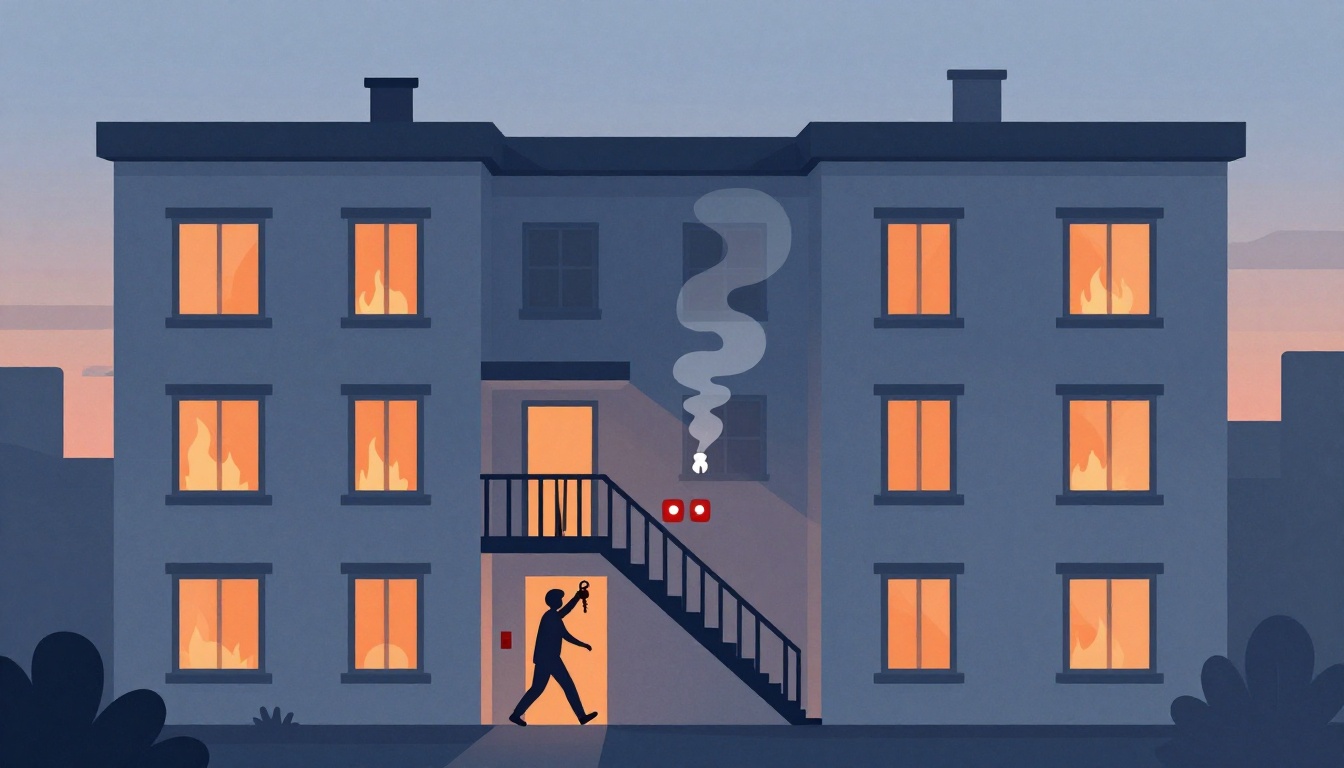
One night, a man on the second floor woke up to a sharp burning smell. He didn’t “figure it out” first. He checked for smoke, grabbed his keys only, and left right away. Later, he said the hardest part was ignoring the urge to wait and see.
Building fires can move faster than you expect. In 2024, NFPA data shows home structure fires happened about every 96 seconds. Those fires caused 2,920 deaths and 8,920 injuries, with about $11.4 billion in damage. Also, working smoke alarms can cut death rates by 60%, because they give you a warning before you feel panic.
This guide shares simple, proven actions based on NFPA and fire department escape basics. You’ll learn what to do when you spot fire danger, how to escape without getting trapped in smoke, what to do if you cannot get out, and how to help others safely. You’ll also get a quick note on 2026 updates to emergency messaging in buildings, plus why drills matter if you use newer smart smoke alarms.
When the alarm sounds, your body wants to freeze. Your job is to move, fast and smart, toward fresh air. Start with the first things you should notice, then keep going.
Spot Fire Danger Fast and Get Moving
Your eyes and nose are early-warning tools. If you wait for proof, smoke may already block your escape route. Many people miss danger because they think, “It’s probably nothing.” But smoke and fire don’t negotiate.
Here are common signs that mean leave now, even if you’re not sure where the fire is:
- A burning smell (especially near outlets, kitchens, or hallways)
- A sprinkler that’s running, or water on the floor near a ceiling light
- Visible smoke or haze in a stairwell or corridor
- Flames around a door, trash area, or mechanical room
- Hissing sounds plus heat from a vent or wall
If you smell smoke, treat it like a fire. Decision time is short.
Also watch for alarms. Even with “smart” systems, assume the message is real. Fire departments often stress that you should get out immediately, then verify details outside.
A 2026 focus in building safety rules is on clear emergency messages through alarms and speakers. That means announcements should be easier to understand, so people can follow directions faster. Still, don’t wait for perfect instructions if you already see smoke.
For background on escape planning and what NFPA recommends for homes and planning, you can review how to make a home fire escape plan on NFPA.org.
React to Alarms and Smoke Immediately
When alarms go off, treat them like a direct order. Smart alarm systems may alert your phone too, but don’t rely on app notifications. Noise, smoke, and power issues can mess with signals.
Next, check the air and heat near your door. If you feel heat or see smoke, don’t open it. Stand back and reassess your route. In many buildings, elevators become unsafe fast, so use stairs only.
If smoke is heavy, keep your breathing lower. Smoke rises, and cleaner air sits near the floor. That simple body position helps a lot.
Pick the Nearest Safe Exit
Now choose the closest route that looks passable. “Closest” does not mean “fastest if it’s blocked.” If smoke fills a hallway, you may need a different exit.
Avoid grabs. Don’t hunt for wallets, chargers, or bags. Flames often surge through openings, and delays cost time.
If smoke is thick, crawl instead of standing. That one choice can keep you from coughing and panicking, which slows you down.
If you’re in a higher floor or complex building, evacuation can be different. NFPA’s FAQs about building evacuation explain why layout and stair access matter.
Master Safe Escape Moves to Reach Fresh Air
Escaping a building fire is like finding a way through a foggy maze. You need small, repeatable moves that protect you from smoke and heat.
Think about three goals:
- Avoid fire and hot gases
- Reduce smoke inhalation
- Stay on a route that stays open
In real emergencies, people get hurt by instinct. The instinct says, “Open the door. Run now.” The safer move says, “Check the door first, then go.”
When people practice these steps ahead of time, they don’t have to think mid-crisis.

Test Every Door for Heat Before Touching
Before you open a door, test it. Use the back of your hand or your forearm. You’re checking for heat, not just smoke.
If the door feels hot:
- Don’t open it.
- Look for another exit route right away.
If it feels cool:
- Open it slowly.
- Be ready to close it fast if you see smoke or heat rush in.
This tiny step prevents burns. It also stops you from walking into a flash of heat.
Crawl Low and Cover Your Face
Smoke is dangerous because it irritates your lungs and clouds your senses. Crawl to stay low. Cleaner air often sits near the floor.
If you can, cover your nose and mouth with a wet cloth or towel. Even a damp shirt helps, because it adds a little barrier before smoke hits your breathing.
Move with calm speed. Don’t sprint. Sprinting leads to slips, falls, and lost exits.
Meanwhile, keep your eyes on the path to the stairwell or exit door. If the hallway gets worse, turn toward the safest known route.
Shut Doors to Block the Blaze
As you leave a room or pass a doorway, close doors behind you when you can. Closed doors slow smoke and fire spread. That buys time for people behind you and helps firefighters gain safer access.
Just remember this rule: close doors, don’t delay leaving. If you’re moving toward the stairwell, keep moving.
Handle Being Trapped Until Help Arrives
Sometimes there’s no safe way out at the moment. That doesn’t mean it’s over. It means you switch from escaping to surviving while help finds you.
If you’re trapped, aim for a room with a window if possible. Windows can provide ventilation and a place to signal. If there’s no window, choose the safest room away from the smoke.
Also, stay calm enough to think. Panic makes you rush. Rushing makes you take bad doors.
Seal Your Space Against Smoke and Flames
Once you’re in a room:
- Close the door.
- Seal gaps under the door with wet towels or clothes if you can.
This slows smoke from entering. Also, keep low inside the room. If smoke is already inside, staying near the floor protects your breathing.
If the window is reachable and safe, crack it for air. Don’t open it wide if smoke is coming from below or nearby.
Signal Firefighters and Call for Help
Call 911 if you can. Give your address and the room or floor number.
Then signal from the window. Use a bright cloth if you have one. Raise it so responders can see it from outside.
If your phone battery is low, call briefly and then save power. The goal is simple: make your location impossible to miss.
In 2026, building alert systems get smarter about message clarity. Still, your best signal is direct and visible. Smoke can hide everything, but bright movement cuts through.
Assist Loved Ones Safely from the Start
You want to help people. That instinct is good. The danger is rushing back or pulling someone into the wrong path.
Start by choosing a safe exit route first. If you can help while moving toward that route, do it. If you cannot, focus on getting yourself out. Firefighters need at least one person to guide rescue.
Help the people who move slower:
- Kids
- Older adults
- Anyone with mobility issues
- Anyone who’s disoriented
If you must drag someone, do it only when the path stays safe. Keep your head low. Don’t carry bulky items that slow you down.
Once you’re outside, tell firefighters who’s missing. Give last known locations and who you tried to reach. Avoid inventing details you don’t know. Accurate info helps responders move faster.
Most importantly: never re-enter the building to search for pets, things, or missing family. That choice saves time and can save your life too. It also keeps you from becoming another victim.
Stay Safe Outside and Support the Rescue
Once you’re out, you’ve finished one of the hardest parts. Now you protect yourself while the rescue team does its job.
Move away from the building to a clear area where firefighters can work. Watch for falling debris, heat, and smoke that drifts. Then gather at a safe spot so you don’t get separated in chaos.
Also, follow directions from firefighters. They may reroute people based on wind, smoke spread, or stair access.
Do not go back for pets or belongings. Even if you think you know where the danger is, fire conditions change fast. One open door can turn “safe” into deadly again.
If you’re using newer smart alarms, remember drills. Set a reminder to do a family practice every year, especially after you buy or update smart smoke alarms. Tech can add convenience, but you still need muscle memory. When alarms sound, everyone should know what “leave now” looks like.
For more escape planning tips, you can use Home Fire Escape Planning guidance from VTFire.
Conclusion: Get Out Fast, Escape Smart, and Help Without Re-Entering
A building fire can turn a normal hallway into a smoke maze in minutes. That’s why your best plan is simple: alert fast, escape smart, and stay out.
Test doors for heat, crawl low when smoke is heavy, and close doors behind you to slow the spread. If you’re trapped, seal your space, signal clearly, and wait for firefighters to reach you. And when you’re helping loved ones, focus on safe movement out, then share what you know once you’re outside.
If you want one next step that matters, practice your building fire escape plan this week. Then ask your local fire department about building-specific guidance, especially for multi-unit places.
And if this post helped, share it with someone you live near. The best time to plan is before the alarm goes off.