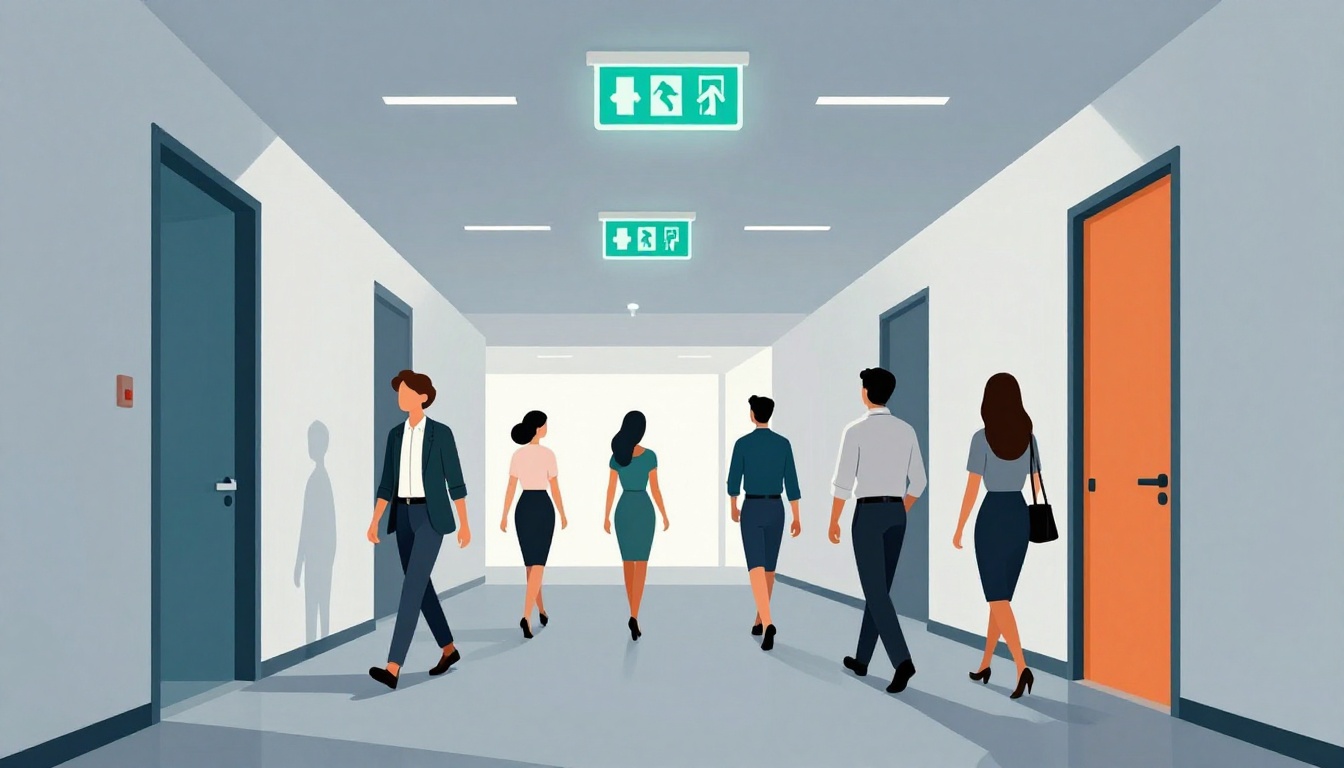
A fire can spread in minutes, so your drill has to feel automatic long before an alarm ever sounds. In schools and offices, people should practice so they can find exits fast and move without panic, even when they’re stressed. That’s why how are fire drills conducted effectively matters, not as paperwork, but as a safety habit.
If you’ve ever wondered why drills seem “messy” or inconsistent, you’re not alone. Many buildings have the plan on paper, yet people still hesitate at doors, forget routes, or don’t know who checks for others. When drills don’t match how your space really works, people tune out or second-guess themselves.
Effective fire drills also build calm routines. First, they teach exit knowledge. Next, they help staff assign roles (and stick to them). After that, they test whether the alarm, signage, and evacuation flow actually work together.
Most importantly, you need drills that follow the right rules and still feel realistic. In the next sections, you’ll see smart planning, smooth execution, and a follow-up step that improves results. Then you’ll get timing tips, common pitfalls to avoid, and practical guidance for schools, workplaces, and any building trying to stay compliant and safer.
Build a Rock-Solid Plan Before the Siren Sounds
Before you ever pull the alarm, you need a plan that matches real life. That starts with planning fire drills effectively so people practice the right actions, at the right times, and from the right starting points. When drills feel random and make sense, people move faster and panic less.
Pick Surprise Times, Days, and Spots to Keep It Real
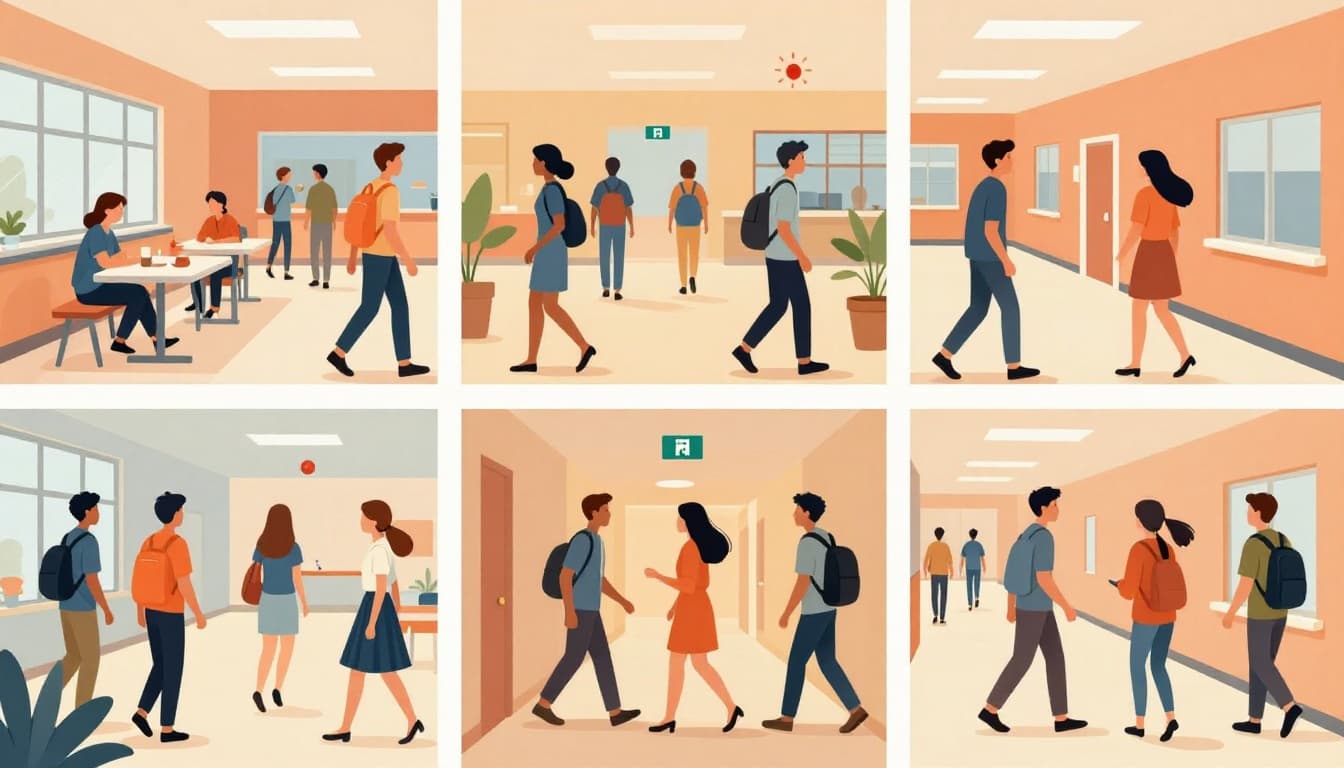
A drill should not follow a neat script. Mix morning, lunch, and after-school schedules, and rotate by day of week. Just as important, change where people start. Send the next group out from a hallway, the cafeteria, or a spot like near the gym doors instead of always starting at the same entrance.
Imagine a fire at lunch. Practice that too, not just during class time. For schools, lunch and recess create natural crowd movement and noise, so the drill teaches real focus. In workplaces, shift changes and break windows mimic how people actually scatter between tasks.
Also, space out similar drills on the calendar. Many teams aim for at least an hour between drills on the same shift, so you don’t “teach to the test” by over-practicing one pattern.
Here are ideas that keep it real without being chaotic:
- Time swap: Run one drill early, another right before lunch, and one during a late meeting block.
- Spot rotation: Plan different starting areas across each run, including restrooms or secondary exits.
- Pattern break: Use a different exit path at least once per quarter.
If you want an overnight option, keep it thoughtful. Use coded announcements for staff, but still rely on clear visual alarms for everyone who is inside. That way, people can react even if they do not get the message.
For organization, build a simple yearly calendar and log each drill date, time, shift, and location. If you use an automated scheduling tool, track compliance in one place so you can spot missed drills before an audit does.
For more guidance on building drill schedules that actually meet expectations, see Tips for Conducting Effective + Compliant Fire Drills.
Train Everyone on the Basics First
Training needs to happen before your first drill. Think of it like rehearsing a school play. If people know their roles early, the “show” feels safe.
Start with short, plain sessions for staff and students. Cover exit routes, what “quiet evacuation” means, and where everyone meets. Then show assembly points in real space. Point out doors, hall choke points, and stairwells people might avoid.
Most importantly, teach the rules you expect during the alarm:
- No pushing or grabbing
- Go the planned route
- Stay with your group
- Report missing people to staff, not other students
After the lesson, post simple refreshers. Maps work best when they match the building layout exactly, and posters should show the route at the level people can see quickly.
Finally, practice with staff role cards. Who checks bathrooms? Who closes doors? Who leads walkers who need extra time? When roles are clear, confusion drops fast during the real drill moment.
If you want a practical walkthrough, this School Fire Drills: A Practical Guide can help you align training with your procedures.

Loop in Parents and Emergency Responders Early
For school settings, parents deserve clear, calm communication. A week-ahead notice can reduce stress and improve cooperation, but it needs to be written carefully so it does not ruin the drill’s usefulness. Share the date range, general time window, and what parents will see.
You also can explain the bigger “why.” Tell families that drills build muscle memory, so students stay steadier under stress. If your district prefers to limit details for surprise, you can still share basic safety steps and how routes will be managed.
Early coordination with emergency partners matters in every setting. Send your floor layouts, current evac routes, and your run schedule to local fire, EMS, and police. In addition, invite their input. They often spot issues you miss, like blocked streets during drop-off or stairwell bottlenecks.
Some districts use a “family guide” page for emergencies. For an example of how districts communicate, reference Family Guide to School Emergencies.
Run the Drill Smoothly to Build True Escape Skills
You can’t measure “confidence” with a stopwatch alone. So, executing effective fire drills means you test what people actually do: the route, the pace, the exits, and the tools that guide everyone out. Think of it like tuning a car before a race. The drill should run smooth, even if the building feels busy or noisy.
Start with a simple goal: calm movement from the first alarm to the safe spot. If your drill feels chaotic, it usually means you missed a practical test somewhere. That’s why the drills below focus on hands-on checks, not just theory.

Test the Must-Have Evacuation Moves and Gear
First, you need to test the basics that make evacuation work in real life. During the drill, check that people can find and use routes from any starting point, not just the easiest door. Also test speed, but keep it safe. Your aim is an organized exit in under 3 minutes for most spaces, based on your building’s size and layout.
Run these core tests in order, because each one affects the next:
- Routes from anywhere: Pick random start areas (office room, stair landing, break area). Then confirm the route is clear and obvious.
- Time to safe spots: Measure “alarm to assembly” and watch for delays near choke points.
- Alarm and lights work: Verify audible alarms and strobes show up where people gather.
- Exits stay unblocked: Check doors, hallways, and stairwells before and during the run.
- Pace matches policy: No running if your policy says walk. People should move with purpose, not panic.
Then practice the “must-do moves” as a routine, not a scramble. For example, people should:
- Stop and listen (no talking over the alarm).
- Leave immediately using the posted path.
- Walk smart through doors and corners, staying single-file or grouped as instructed.
- Avoid backtracking once they pass the exit point.
- Check in at the safe spot so leaders know who’s present.
Use building-specific examples so the drill feels real. In a school, test a classroom route from a portable near the parking lot, then from a main hallway near the office. In an office, test an evacuation from a copier room and from a conference wing with fewer exits.
If you want extra structure, this step-by-step fire drill guide can help you align your checks with common expectations.
Adapt for Night Shifts or Tricky Times
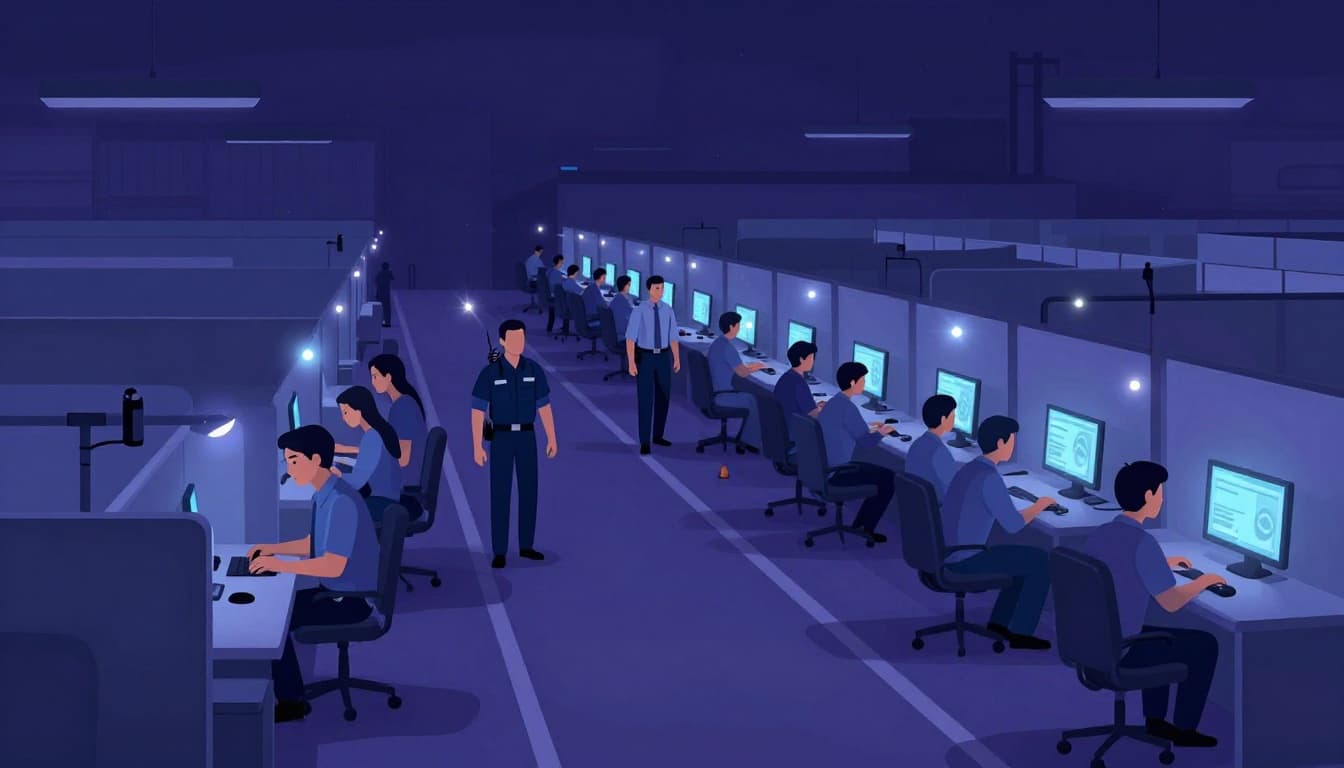
Night shifts need a different setup, because fewer people means fewer natural guides. Also, sound carries differently when hall traffic is low. So, prep night staff for what will actually happen between 9 PM and 6 AM.
Use a clear plan for alerts. Many teams rely on coded voice alerts for staff, while strobes activate for everyone. That matters because not every worker hears a coded message right away. With strobes on, people still get a strong signal, even if radios fail or someone is away from their desk.
Prepare night staff like this:
- Assign a night floor leader who carries a radio and starts the check-in flow.
- Brief staff on what to do if they did not hear the code (they still evacuate).
- Post assembly instructions that match the night setup, especially if fewer doors open.
- Use shorter rehearsal rounds with night teams, so unfamiliar roles don’t slow the first real run.
Think of it as “lighting the road,” not “whispering directions.” The drill should keep everyone covered around the clock, with the same organized exit flow.
Communicate Clearly from Start to Finish
Communication turns a drill into a system. Without it, people guess, hesitate, or stop to help others they do not need to manage during the alarm.
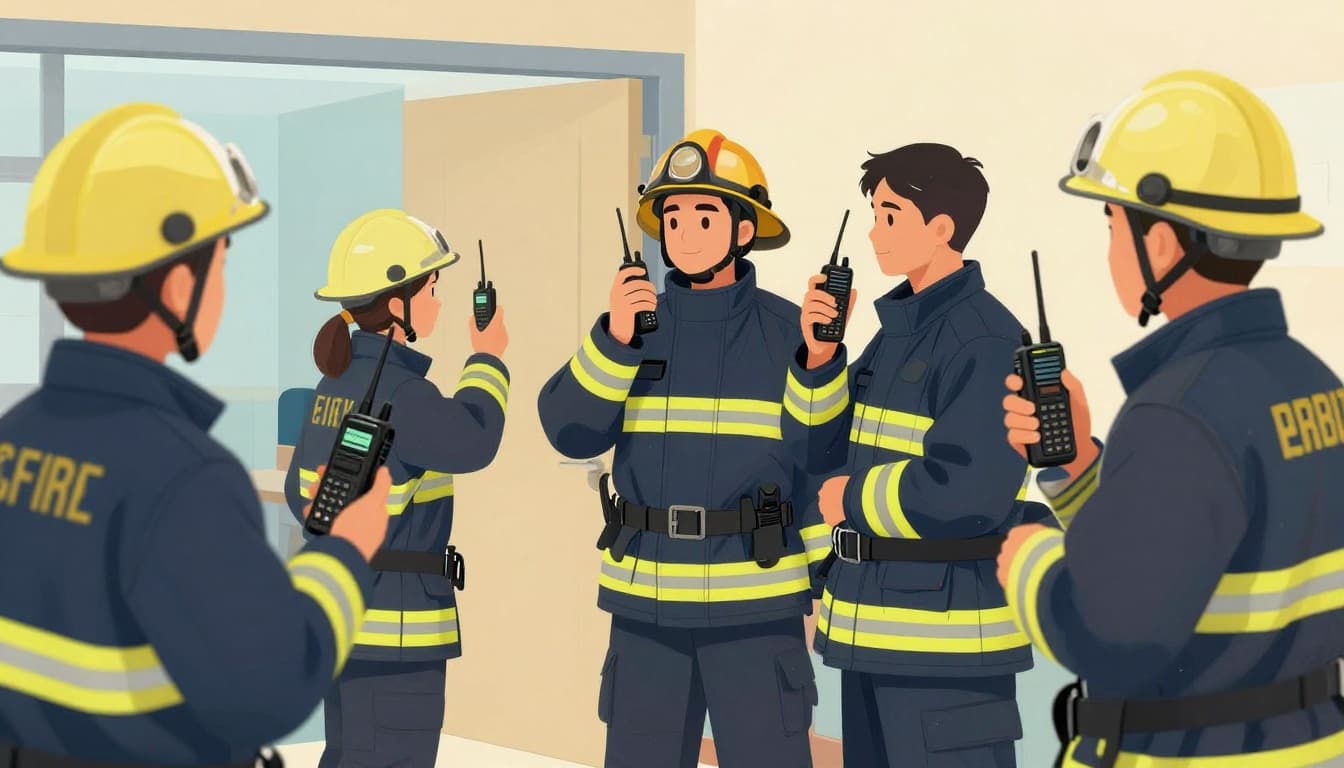
So, during executing effective fire drills, set up radios for leaders and backups ready before you start. Then use simple signals that everyone recognizes. Make sure the plan covers three moments: the start, the move, and the safe-spot check.
Use this practical flow:
- At the alarm: Leaders confirm who has control, and they start moving teams.
- During the walk: Check for blocked exits, closed doors, or crowd jams at stairs.
- At the safe spot: Leaders do quick roll call and report missing people.
Radios should be for clear, short messages. Example message types include:
- “All clear” for completed movement and check-in
- “Hold for access” if an exit needs temporary adjustment
- “Report issue” for injuries, missing staff, or a blocked stairwell
If you use a staff warden model, include backups. One radio can fail. One leader can get separated. When backups exist, accountability stays steady and fixes happen fast during the drill.
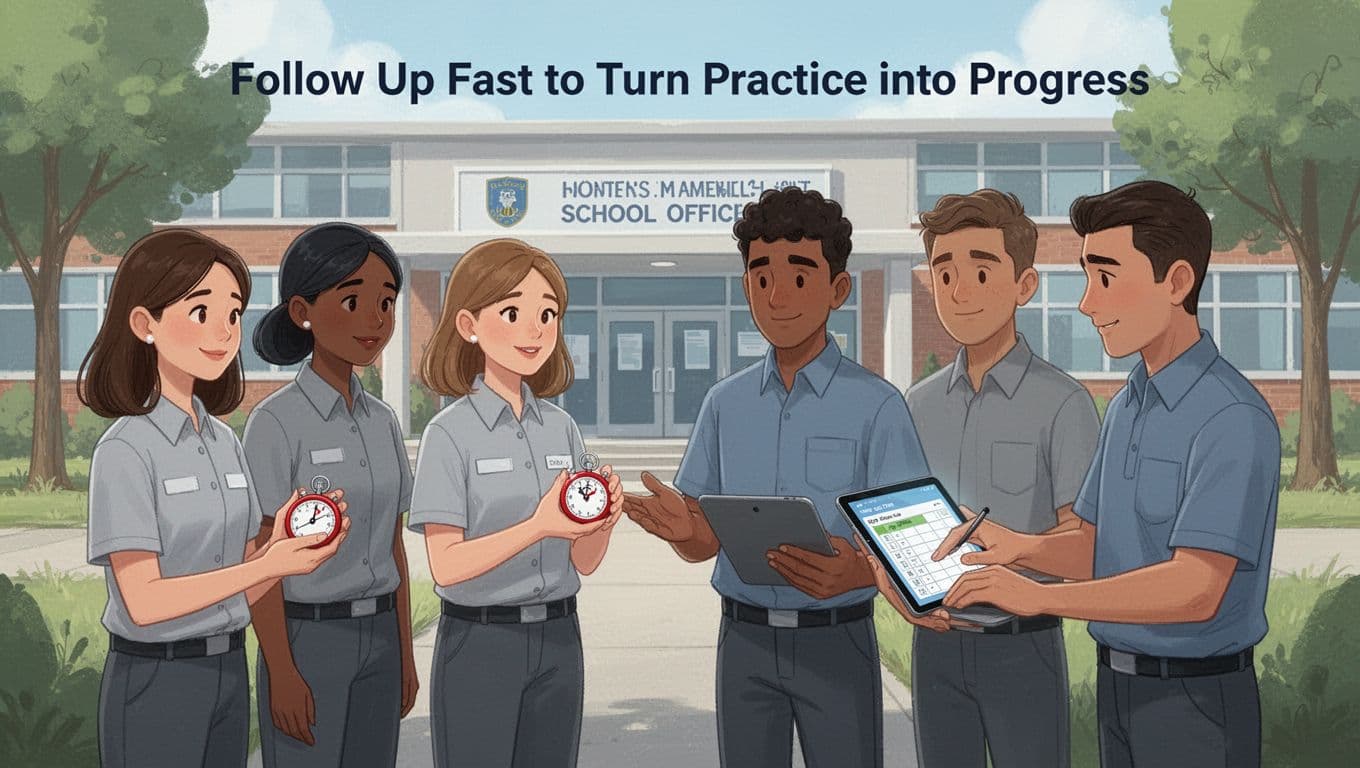
Follow Up Fast to Turn Practice into Progress
A fire drill doesn’t end when everyone reaches the assembly point. If you want real progress, follow up fast, then turn the notes into fixes before the lessons fade. Think of it like sports practice. The game matters less than what you do in the locker room right after.
This is where you tighten timing, spot repeat issues, and prove compliance. You also build trust, because the team sees that their feedback does something.
Log Every Detail for Smart Tracking
Good logs turn “we think it went fine” into proof. Most teams fall into two traps: they write too little, or they write everything except the points that matter for improvement. Instead, log the drill like an incident snapshot that you can compare quarter to quarter.
Your records should include these basics every time:
- Date/time/location of the drill, plus the building or wing
- Participants, including who was present and who had assigned roles
- Problems observed, like blocked doors, slow stair flow, or missing headcount checks
- Evac time, measured from alarm start to safe spot check
- Fixes needed, with owners and due dates when possible
Then use that log for pattern spotting. After two or three drills, you start seeing trends. For example, maybe the same stairwell always slows down, or a particular route gets crowded near a restroom doorway. When that happens, you can treat it like a “kink in the hose,” not a one-time mystery.
Digital tools make this easier and more reliable than paper. You can capture details right after the drill, store photos or notes safely, and pull reports during audits. If you want a structured approach for keeping a drill log, see Fire drill log: A comprehensive guide. Also, check workplace ideas for consistent drill structure from How to Conduct a Fire Drill at Work: A 5-Step Guide.
The goal isn’t to create paperwork. The goal is to create a trail that shows you trained people, found gaps, and fixed them.
Finally, keep the log easy to read. If a supervisor or fire marshal reviews it, they should instantly understand what you measured, what went wrong, and what changed next.
Grab Feedback from Your Team and Pros
Next, run a short debrief huddle while the drill is still fresh. If you wait too long, details fade, and people stop remembering what slowed them down. Aim for a focused talk right after everyone returns, usually 10 to 15 minutes.
Ask the questions that bring out real observations:
- What went well?
- What felt confusing?
- What took longer than it should?
- What paths looked safest and easiest?
- What radio messages worked, and which didn’t?
Also, include responder input when you can. The people on radios and incident roles notice things the rest of the team misses, like which doors jam, how the crowd forms at landings, or where the “handoff” between staff roles breaks down. Their comments often turn into fast fixes, like adjusting door checks or reassigning floor spotters.
During the huddle, keep praise specific. Say things like, “The group stayed together at the stairwell,” or “Check-in happened fast at the meeting point.” Then list tweaks as concrete items, not vague goals. For example, “Re-train staff on the backup route,” or “Post a clearer reminder near the door that gets overlooked.”
If you need a reminder that good drills include learnings, not just evacuation counts, Conducting Effective and Compliant Fire Drills – AHCA/NCAL offers a strong view of why drills tie back to ongoing safety systems.
After the huddle, assign owners. Then schedule the fixes for the next shift, if possible. That way, your next drill feels like progress, not repetition.
Time It Right, Skip Pitfalls, and Follow Top Rules
Timing turns a fire drill from a “practice” into a real skill. Get it wrong, and people treat the alarm like background noise. Get it right, and the route feels familiar, even when stress hits.
Also, rules matter. They come from the Life Safety Code and from enforcement practices during inspections. Your goal is simple: vary the drill, document the results, and fix what the drill reveals.
How Often Do Effective Fire Drills Need to Happen
Fire drill frequency best practices start with one idea: practice when people can actually be confused. That means schools should run drills quarterly or more during the school year, and many states require monthly fire drills while school is in session. For workplaces, the “right” cadence often comes from your shift coverage, your risk level, and what your local fire marshal expects, so drills should happen per shift policy, not just when it’s convenient.
Here’s a practical way to schedule without falling into a rut:
- Schools: aim for at least 4 per year, and use monthly when required or feasible. Space them through the term, including lunch or gathering times.
- Workplaces: run drills regularly (commonly quarterly as a baseline), then adjust based on occupancy changes, hazards, and the number of shifts.
- Always vary: time of day, day of week, and starting locations.
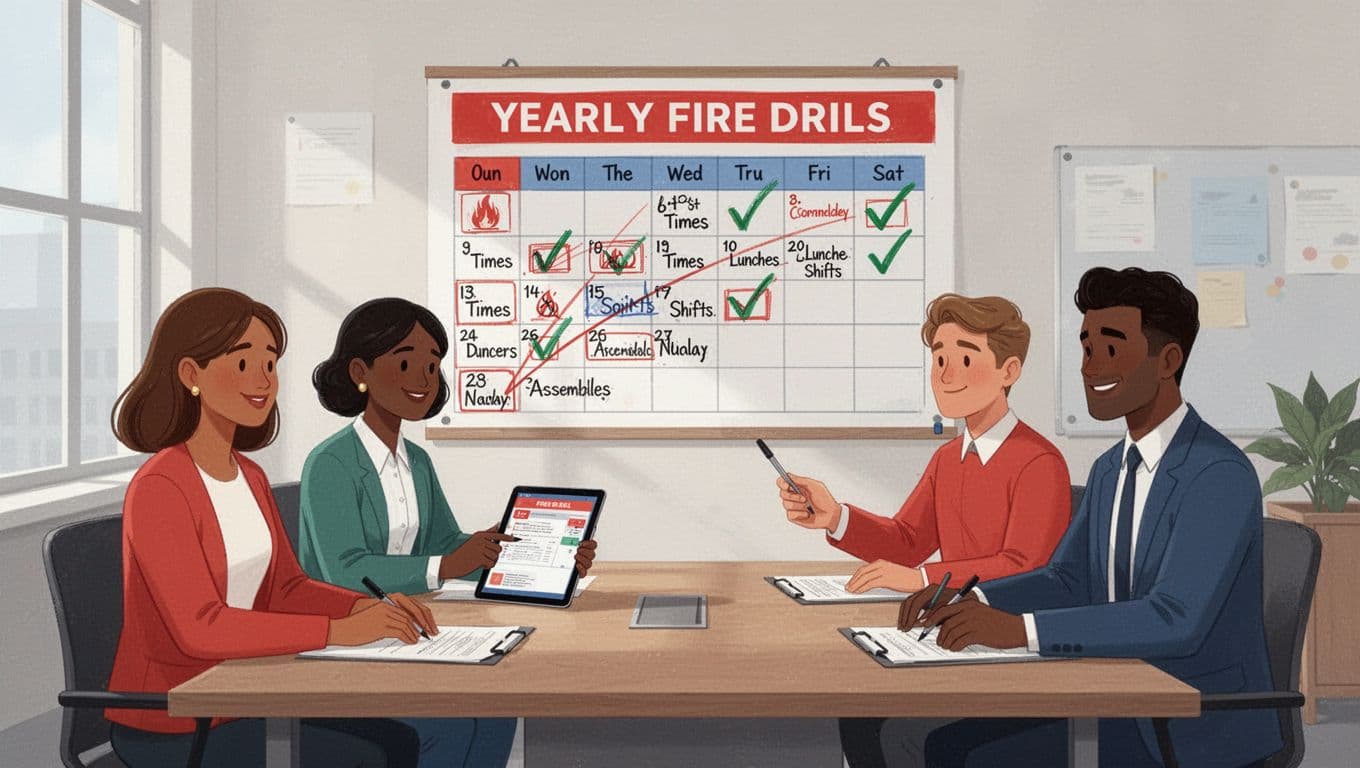
For consistency, build a calendar and treat it like a recurring safety appointment. You’ll also want to follow OSHA’s expectation that you maintain emergency plans and training, then support your program with clear records (see OSHA evacuation drill requirements).
Dodge These Common Fire Drill Flops
Most drill failures look small at first. Then they show up during inspections, when the same issue repeats.
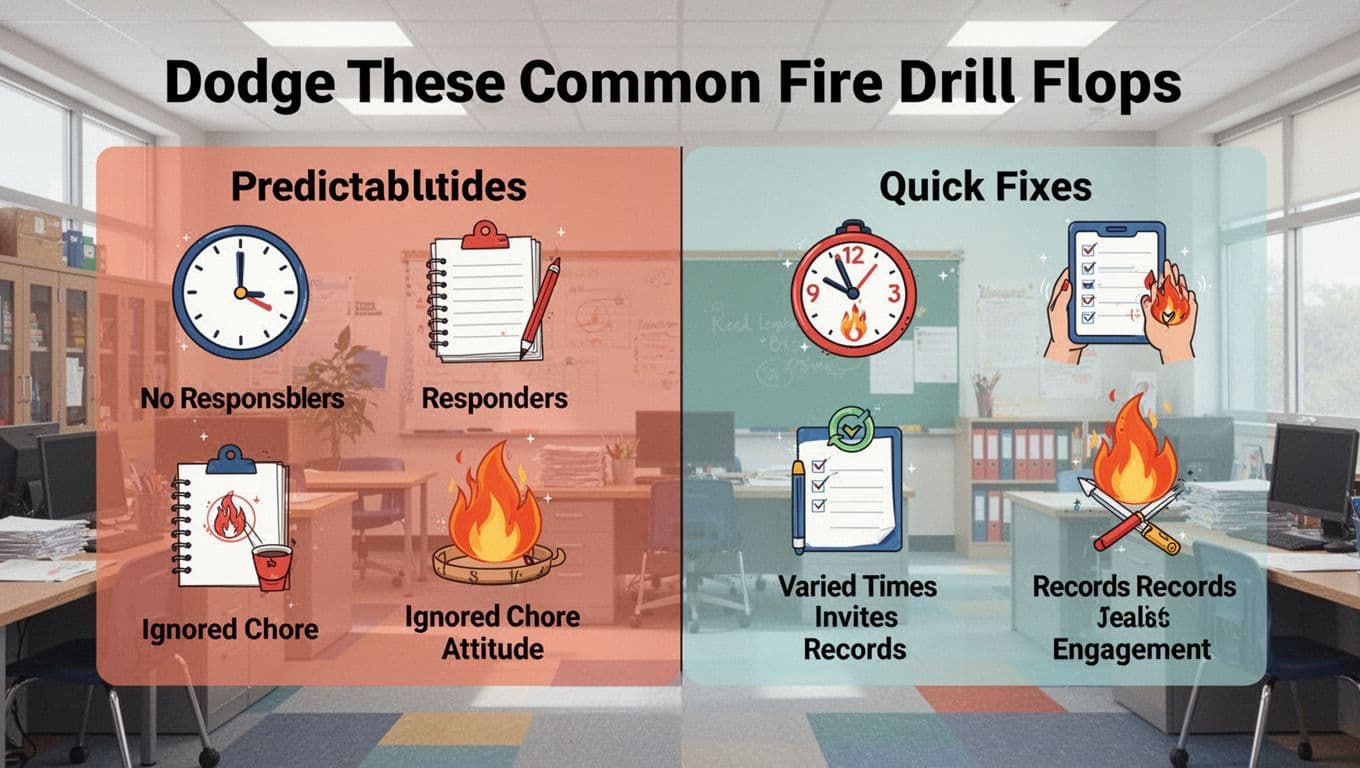
Top flops to avoid, and what to fix:
- Predictable timing: If the drill always hits during the same period, people “wait it out.” Fix by rotating time windows and starting points.
- No responder invite: If you never coordinate with fire officials, you miss local concerns. Fix by including them when planning and aligning documentation.
- Poor records: “We think it went well” isn’t proof. Fix with logs that show time, location, issues, and corrective actions.
- Treating it like a chore: When staff rush the process, the calm routine collapses. Fix by training owners, not just participants.
These issues hurt because they reduce realism and weaken compliance evidence. In short, you don’t just practice evacuation, you prove your system works.
Nail Compliance and 2026 Safety Trends
Compliance is less about sounding official and more about being consistent. Life Safety Code expectations focus on how drills connect to your broader fire protection program, including inspections and corrective actions. It also helps to review guidance on what “effective” looks like in your building type, like what’s outlined in Conducting Effective and Compliant Fire Drills – AHCA/NCAL.
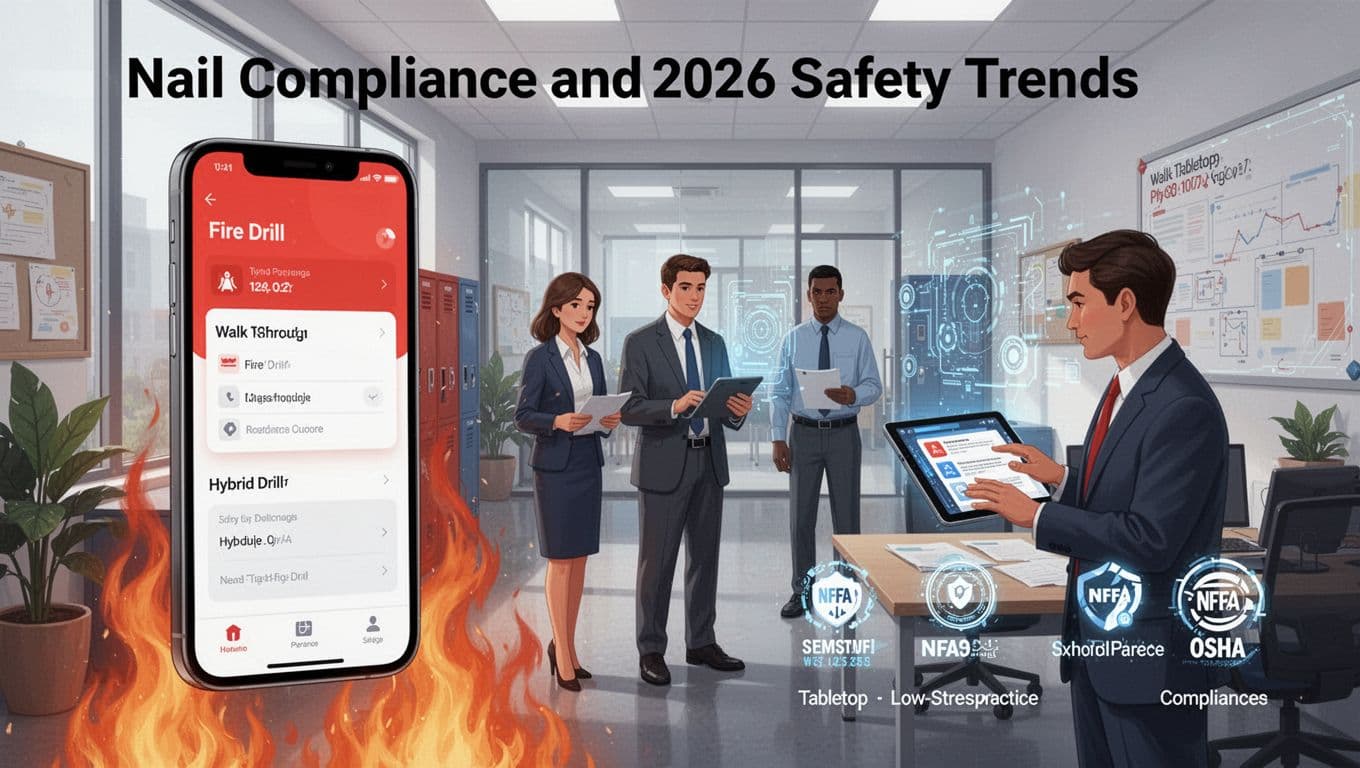
Now, 2026 trends are pushing teams toward easier tracking and smarter prep:
- Apps for scheduling and records (less spreadsheet chaos, better proof)
- Hybrid practice that mixes real movement with low-stress walk-throughs
- Tabletop or walk-through checks for parts of the plan you can’t test safely during a live drill
- Mixing announced and unannounced elements so practice stays real
If you want your program to hold up next year, set rules for scheduling now, standardize your drill log, and practice the same core moves under new conditions.
Conclusion
When you ask how are fire drills conducted effectively, the strongest answer is simple: drill the plan you truly follow, then improve it fast. Because people move better when the route, roles, and timing feel familiar, your whole goal is steady, calm exits.
Plan varied drills, run them with clear communication, and then debrief right away. Keep the practice focused on what saves time and prevents mix-ups, so the learning sticks long after the alarm ends. Even in a tough year of fire risk, practiced evacuation still matters, since research has found real fires often bring fewer fatalities in buildings that train regularly.
Now pick one concrete step for your next run. Review your last drill log, choose the biggest repeat issue, and adjust the schedule or roles today, not later.
What one detail in your building could slow people down during the first 2 minutes, and how will you test it in the next drill? With these tips, your fire drills will shine when it counts, and your next fire drill will be ready for real life.