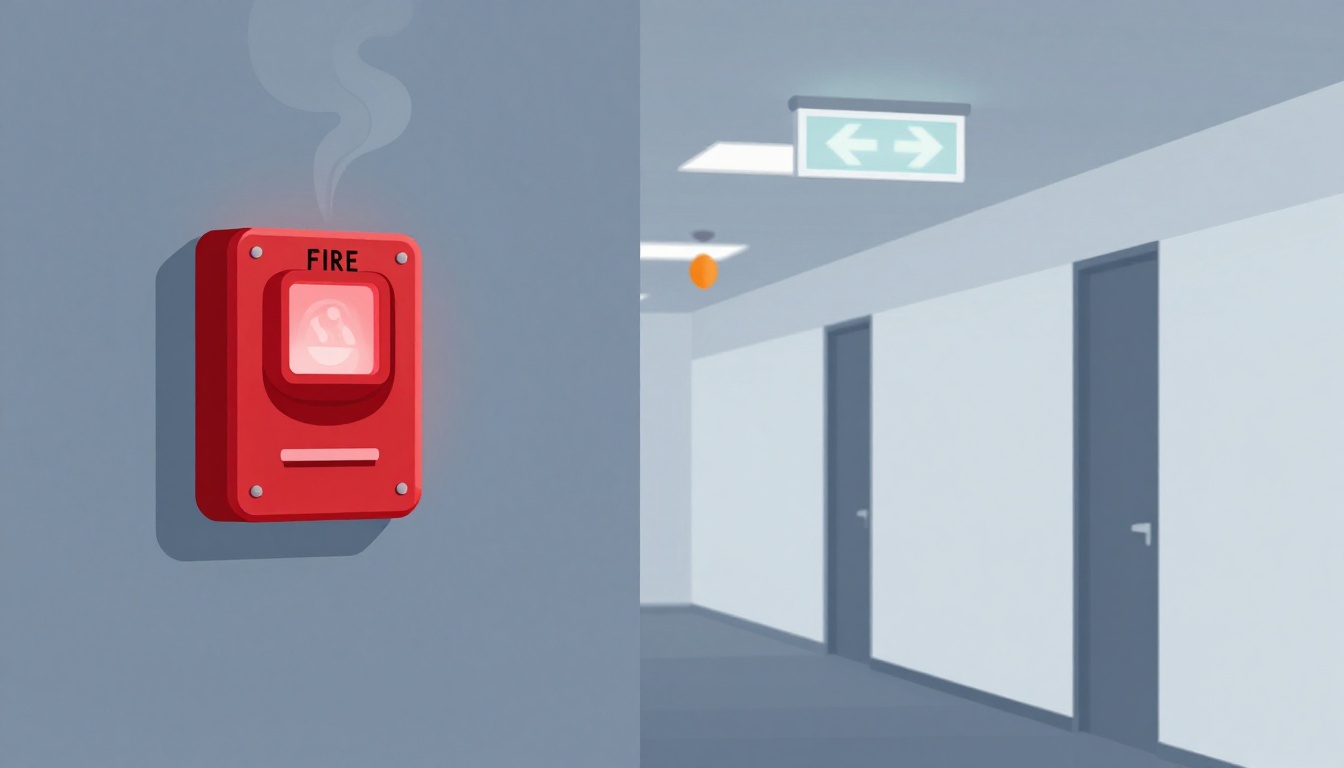
If you smell smoke in your office and the alarm starts screaming, your first thought might be, Is it real? Then panic hits, even before you know what’s happening.
When a fire alarm is triggered, it sets off a chain reaction that can detect the problem, alert people fast, and guide a safe exit. Modern systems in 2026 do more than just make noise. They can use smarter detector behavior, staged responses, and clearer voice instructions to reduce confusion.
The process usually runs from detection to notification to evacuation. First, sensors notice smoke, heat, or manual pull station activations. Next, the control panel checks signals and decides how the building responds. Then alarms sound, doors and equipment may adjust, and alerts can notify emergency teams.
In the sections ahead, you’ll see what detectors do, how the control panel reacts, what the alarms and building systems release, and what you should do while you get out safely.
How Detection Triggers the Whole Chain Reaction
Fire alarms do not “guess.” They react to clues that match fire behavior. That clue comes from initiating devices like smoke detectors, heat detectors, and manual pull stations.
Smoke detectors typically use one of two sensing methods. Photoelectric detectors watch for smoke particles that scatter light. Ionization detectors sense conditions that change electrical current, which can respond faster to some fast-flaming fires. Both types aim to catch danger early, before flames grow.
Heat detectors work differently. Instead of looking for smoke, they monitor temperature rise. Some models trigger when heat rises quickly. Others trigger when it reaches a set temperature.
Manual pull stations give people a direct way to start the alarm. In most installations, they’re mounted near exits, at a height often in the 42 to 48 inch range. That way, you can reach them even in a hurry.
Placement matters because air movement changes what detectors “see.” Many code and design rules keep detectors a consistent distance from walls and obstacles to improve airflow. For example, designers often place ceiling smoke detectors around 4 inches from walls (or follow local spacing rules for your specific ceiling layout).
Once an initiating device senses trouble, it sends a signal to the fire alarm system. In many buildings, that signal travels through wired circuits. In newer setups, it can travel through wireless communication too. Either way, the goal is the same, get the panel the right information quickly.
But not every alert means fire. Steam from a shower, dust from construction, or cooking smoke can all trigger alarms in older systems. In 2026, many systems use smarter signal processing to better sort normal conditions from real threats. The system still reports the alarm, but it can reduce nuisance behavior by analyzing patterns instead of reacting to every small change.
To make this feel real, imagine a smoke detector as a neighborhood sensor. When it sees a signal that doesn’t fit the usual pattern, it “reports to headquarters” right away.
A simple diagram can help readers visualize the flow: detectors send signals, the panel decides, outputs notify occupants. Consider adding a labeled building schematic in your own mind, or on a supporting graphic.
Smoke and Heat Detectors Explained
Photoelectric smoke detectors often work well for smoldering fires. Think of slow-burning materials that create smoke before flames. Ionization detectors often respond well to fast-flaming fires. In other words, different sensing approaches can cover different fire styles.
Heat detectors add another layer. They don’t react to smoke, so they can be useful where smoke might be hard to interpret. That said, heat alarms need time to detect a rising thermal condition. That’s why many buildings use a mix, smoke detectors for early warning, heat detectors as backup where they fit best.
Wireless options also grew in popularity. In 2026, more homes and smaller buildings can use wireless detectors that are easier to install, especially when running wire is tough. Still, you should treat wireless as a system. If battery maintenance and device health checks get ignored, performance drops.
If you want a plain-language reference on how a panel manages initiating devices, see how fire alarm control panels work. It helps connect the detectors you see with the brains you don’t.
Pull Stations: Your Hands-On Emergency Button
A pull station is the fastest way to trigger a fire alarm when you spot danger first. It’s the red lever most people recognize. Even if the building’s detectors haven’t caught up yet, you can start the process immediately.
Typically, pull stations sit near exits. That location matters because you’re likely to reach them while moving through hallways or at doorways. If you see flames, a growing smoke trail, or an active hazard, you don’t wait for confirmation. You pull the station and move toward your exit.
One important gotcha: pulling the station is not permission to “check it out.” After activation, follow the building’s emergency plan. Let the alarm system and trained staff handle verification. Your job is to get people moving in the right direction.
The Control Panel Takes Charge as the System’s Brain
The Fire Alarm Control Panel (FACP) is the system’s “brain.” It continuously monitors all connected initiating devices, and it manages outputs like horns, strobes, and voice evacuation messages.
When a detector triggers, the panel doesn’t just blast alarms instantly in every case. It often performs signal processing. For example, it can check the device type, confirm it matches alarm criteria, and verify which zone or area reported the signal.
Modern panels also keep records. Many systems run routine self-checks and log trouble signals. That way, when something fails, the building can fix it before it becomes a safety problem.
In everyday terms, the panel acts like a dispatcher. It receives the call from a “caller” (the detector), confirms the call details (zone and device state), then sends instructions to “notify people” outputs.
If you want a more visual explanation of the panel role in the full system, this guide is useful: how a fire alarm control panel works.
Also remember that 2026 updates to NFPA 72 emphasize the quality and safety of systems, including cyber protections for network-connected devices. If a system connects through IP, cellular, or cloud services, newer requirements expect security plans and access controls. That helps protect alarm functions from tampering or interference. For a broader overview, see NFPA 72 fire alarm system standards and compliance.
One-Stage vs Two-Stage: Why the Difference Matters
Not every building sounds alarms the same way. That choice often comes down to what the building can handle during an emergency.
A one-stage system can move straight to full alarm. When it receives an alarm signal, it can immediately activate evacuation outputs. This is common in smaller buildings and some home-style setups.
A two-stage system adds a pause for human verification. Stage one might send a pre-alert. Staff may be able to respond, check a safer area, and confirm what’s happening. Then, if needed, the system escalates to full evacuation.
Why does that matter? Because it helps reduce panic while still moving fast. In an office, people may hesitate when they hear an alarm. A two-stage approach can help staff guide early actions without overwhelming everyone at once.
However, the two-stage idea works only when trained staff follow procedures. If nobody checks stage one properly, you still need to evacuate. When in doubt, treat the alarm as real and move to safety.
Alarms Sound and Buildings React to Protect Everyone
Once the panel confirms the alarm, it triggers notification appliances. That usually includes horns and bells (sound), and strobes (light). Many systems use voice evacuation too.
These outputs do more than wake people up. They support different needs. Someone in a meeting may miss a horn. A person with hearing loss may need visible alerts. Voice messages can also reduce confusion in bigger spaces.
But it doesn’t stop at noise. In many modern buildings, the fire alarm system integrates with other safety features. For example:
- Doors can unlock or hold open to help evacuation flow.
- Elevators can stop serving upper floors and recall to a safe level.
- HVAC can shut down or switch modes to limit smoke spread.
- In sprinkler-equipped buildings, sprinkler activation can happen independently, but fire alarm integration may also coordinate control logic.
- Exit signs and guidance lights can help point people to safe routes.
In a real emergency, these actions reduce the “how do we leave?” question. People can focus on moving calmly.
If you’re planning to build trust with readers, a short video can help. Consider embedding a demonstration video that shows alarm outputs (strobes, voice, exit guidance) in a controlled setting. Watching how it looks and sounds can reduce fear when it happens for real.
Visual and Voice Alerts That Guide You Out
Strobes matter because they cut through distractions. They also help during power issues. Many systems include backup power, so signals can still work after short disruptions.
Voice alerts can be especially clear in crowded spaces. A good message uses simple commands, like “Evacuate now” and guidance toward exits. Voice can also help reduce repeat instructions that people mishear.
Still, voice alerts aren’t magic. If the speaker placement is poor, some rooms may hear too faintly. That’s why alarm design and testing matter so much.
A helpful framing for readers: alarms are like signage you can’t ignore. They speak in time, not after the building gets smoky.
Smart Shutdowns: Elevators, Doors, and Air Systems
When an alarm triggers, the building may shift into smoke-control mode. HVAC shutdown can limit how smoke travels through ducts and returns. That helps keep escape routes safer.
Elevators usually get recalled to reduce the risk of trapping people. Some systems disable elevator use during alarm conditions.
Door behavior can also change. Some doors unlock to support egress. Others may release to prevent blockage. Meanwhile, fire-rated systems aim to slow fire and smoke spread so evacuation paths stay open longer.
In 2026, the “smarter” part often means better coordination. Panels can also reduce repeated outputs caused by recurring detector chatter. Instead of resetting endlessly, the system follows logic so it reports changes without constant confusion.
Firefighters Get the Call While You Evacuate Safely
People often think the alarm’s job ends with the sound. It doesn’t. A key part of the system’s response is notification to emergency services.
Many buildings use monitoring. When an alarm triggers, the system can send signals through phone lines, cellular paths, or internet connections to a monitoring center. That center can then alert the fire department or dispatch per local procedures.
In 2026, smarter verification can reduce nuisance alarms. Exact public stats vary, but the direction is clear: systems are better at distinguishing real fire conditions from common causes.
Then comes the most important human step. While authorities get notified, you evacuate.
Use stairs when you can. Don’t use elevators. Help others if it’s safe. Move fast, but stay calm. Follow posted exit routes. If there’s a rally point outside, go there and wait.
Avoid re-entry. Even if the alarm stops, conditions inside might not be safe. Smoke can stay invisible for a long time.
One simple rule can carry you through: move toward exits, not toward answers. Let the fire response team do the investigation.
Automatic Alerts to Authorities in Seconds
Auto-notification works like a relay race. The detector triggers the alarm, the panel sends the event, then a monitoring path forwards it.
Newer systems may include backup routes like cellular. That matters because disasters often damage normal wiring. If one path fails, another can still get the alarm message out.
Also, modern panel logic may include event verification. That can mean the system checks patterns across multiple devices before escalating outputs. The result is fewer unnecessary responses, and more trust in what the alarm represents.
Your Evacuation Checklist for Any Building
When the alarm goes off, focus on actions you can control. Here’s a simple order that works in most situations.
- Grab people around you (especially kids, guests, or anyone who looks confused).
- Check doors for heat with the back of your hand. If it feels hot, don’t open it.
- Move low if smoke is present and follow the nearest marked exit.
- Help anyone who needs assistance if you can do it safely.
- Stay calm and keep moving. Don’t stop to grab items.
- Meet at your rally point outside, if your building has one.
- Don’t re-enter until fire officials say it’s safe.
For extra support, NFPA has a home-focused escape planning guide. Use it even if you’re not building a plan from scratch: home fire escape planning from NFPA.
Key Differences in Homes, Offices, and Public Spaces
Not every building uses fire alarms the same way. The environment shapes the system design, and it shapes how the alarm “feels” in real life.
Home systems usually focus on fast alerts and easy monitoring. Commercial systems often use staged responses, larger device coverage, and more integrations. Public spaces must handle more people at once, sometimes with less familiarity with the building layout.
That said, NFPA 72 principles still guide how these systems get installed, tested, and maintained. The goal stays the same, early detection and clear evacuation.
Here’s a quick comparison to make it easier to picture:
| Setting | Common system style | Typical alarm experience | Safety integrations you may see |
|---|---|---|---|
| Residential | Interconnected smoke/CO alarms (often with phone alerts) | Sirens plus strobe lights (varies) | Some wireless alerts to your phone |
| Commercial | Two-stage in many larger buildings | Horns, strobes, and sometimes voice evac | HVAC shutdown, door controls, elevator recall |
| Public spaces | Voice-heavy notifications, strong strobes | Clear spoken directions, loud alerts | Guidance lights and centralized monitoring |
All three follow code-based requirements, and all three should get inspections. If you manage a building, use an inspection checklist to keep compliance on track. NFPA’s basics checklist can help you spot gaps: NFPA fire alarm inspection checklist.
Home Alarms: Simple but Connected Protection
In homes, many smoke alarms are interconnected. That means when one unit senses smoke, other units alarm too. Some systems also send push alerts to your phone. That can be a big help at night, or when you’re away and want rapid awareness.
Battery backups are common. However, you still need to test. Many people press “silence” and forget the unit. Don’t do that. Monthly tests and proper battery replacement keep the system ready.
If your home uses wireless detectors, keep them updated as your manufacturer recommends. Wireless depends on stable operation, so check device health messages.
Also, homes may include carbon monoxide alarms. That’s a separate hazard, but it shares the same “wake everyone up fast” idea. The better your home alarms, the easier your escape decisions become.
Office and Shop Systems: Built for Bigger Teams
Offices, stores, and shops handle more occupants. That means you often see more detectors, more alarm devices, and stronger coordination.
Because businesses have workers, some setups use two-stage alarms. That can let staff assess a situation first, then move the whole building when needed. Many places also integrate alarms with security and building management systems.
However, even in workplaces with staff procedures, the rule for you stays simple. If the alarm sounds, treat it as real. Don’t rely on someone else to interpret it for you.
Meanwhile, 2026 standards and updated practices keep pushing systems toward better reliability, including event logs and expectations for network security when alarms connect through modern channels.
Schools and Hospitals: Crowd-Safe Designs
Schools and hospitals often need voice evacuation and strong visual alerts. People may have hearing differences, mobility limits, or unfamiliarity with exits.
That means alarm audibility and intelligibility become key. Voice messages must be clear and understandable. Strobe placement must fit real room layouts. In addition, some systems support special alarm modes for sound-sensitive spaces, when planned and maintained properly.
In high-occupancy settings, evacuation design matters as much as equipment. Door release, crowd routes, and staff roles shape how quickly people move to safety. Then, on top of that, the alarm system supports the building’s smoke-control steps.
2026 Tech Upgrades Making Fire Alarms Even Smarter
Fire alarms have always been about speed and clarity. In 2026, they’re also about smarter decision-making and safer system handling.
One major shift involves security for connected systems. NFPA 72 updates reflect the fact that many alarms now connect over networks, IP, cellular, or cloud. That means stronger protection against tampering and stronger expectations for access controls and update processes.
Another shift involves better detection and improved detector behavior. Some new detection types and improved rules help systems handle real-world conditions like challenging ceilings or tricky smoke patterns.
Also, alarms in 2026 are better at reducing nuisance activation through more context-aware logic. Instead of every small change triggering the same response, modern systems can analyze patterns across sensors and zones. The goal is fewer unnecessary interruptions, and better confidence when an alarm truly matters.
Finally, more systems support remote management features. That includes self-test reporting and data logs. Those logs can help owners and technicians spot weak devices early, before failure shows up during an emergency.
Here’s the bottom line: smart tech helps, but it doesn’t replace maintenance. If inspections and updates fall behind, even the best alarm can’t protect people the way it should.
Staying informed matters because codes and requirements keep changing. If you’re responsible for a building, track what your local adoption schedule requires, not just what you saw in the past.
Conclusion
When a fire alarm is triggered, a lot happens in a short time. Detectors send signals, the control panel processes them, and alarms and building systems work together to help people exit safely.
The key takeaway is simple: treat the alarm as real and evacuate the right way. Even if you think it might be a false alarm, your safest move is still to move toward exits and avoid re-entry.
If you want to stay ready, test your home alarms monthly and review your building’s escape plan. Then share this guide with someone you live or work with.
What part of your building’s fire alarm process do you want to understand better next?