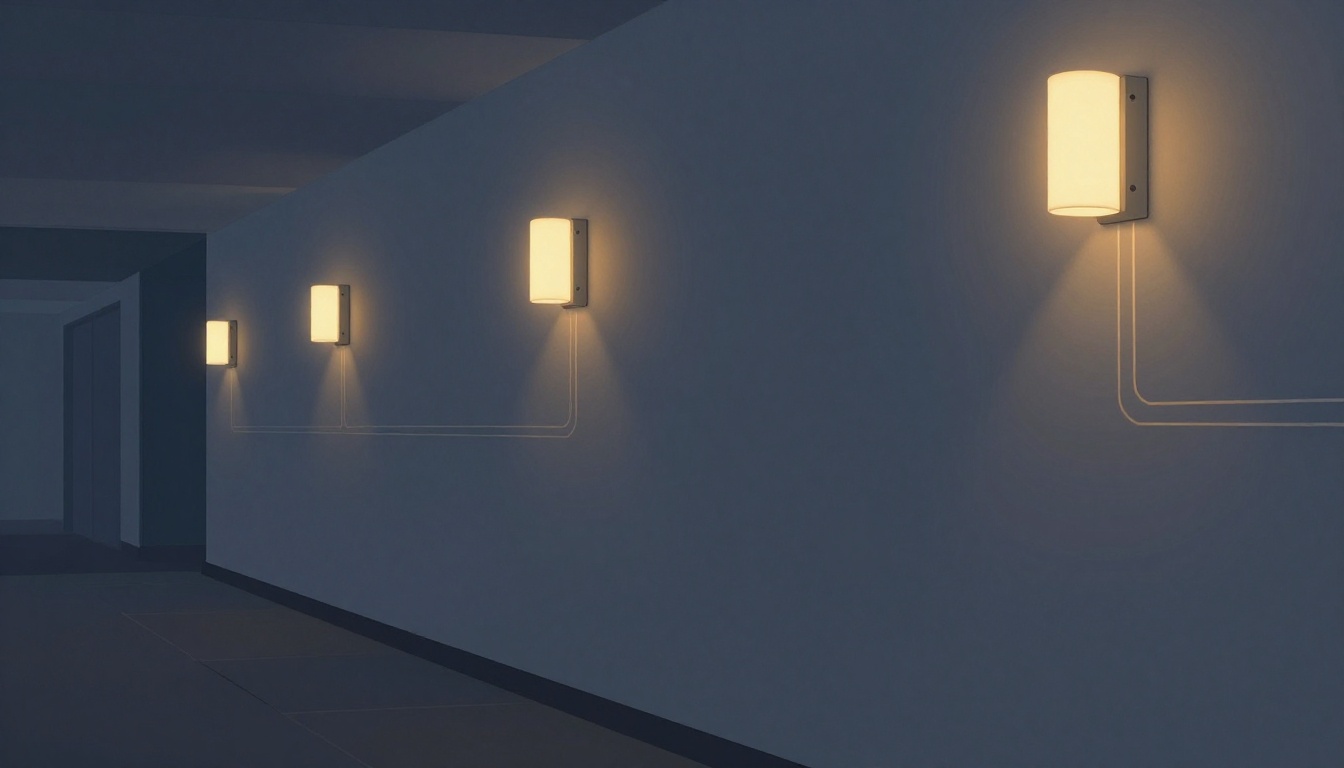
During a real power outage, people look for the lights. In a fire, smoke can hide exits in seconds. That’s why emergency lighting systems matter. When the normal lights fail, these systems guide occupants to safety.
So how do they work, exactly? At a basic level, they keep a backup power source ready, then switch on the moment the building loses power. That includes lights along exit paths and stairs, plus exit signs that stay readable when visibility drops.
But the real story is in the details. Emergency lighting isn’t just a battery and a lamp. It’s a set of matched parts, tested together for performance. It also needs ongoing checks, because a system that “looks fine” can still fail under load.
This guide breaks down the pieces of a typical system, what happens when power fails, and the main system types you’ll see in US buildings. You’ll also get practical maintenance tips and a clear view of what current standards expect, including the kind of testing facilities should schedule in 2026.
What Makes Up a Typical Emergency Lighting System
Think of emergency lighting like a fire drill that’s always ready. The system must be prepared before anyone needs it. It then has to deliver light long enough for safe movement to exits.
Most systems rely on several building blocks that work together. When you understand each part, the whole setup makes more sense, even if you’re not an electrician.
Here are the core components you’ll usually find:
- Emergency light units (LED fixtures): These provide the backup illumination on corridors, stairs, and other egress routes.
- Exit signs: These mark doors and paths clearly, even when normal lighting goes out.
- Rechargeable batteries: They charge during normal operation and power the lights during outages.
- Control gear and monitoring: This detects faults and makes switching reliable.
- Wiring and mounting: They keep everything positioned so people can find exits quickly.
LEDs power most new installations now, and for good reason. They produce strong light with less energy, stay consistent over time, and typically last much longer than older bulb types. Fluorescent and incandescent options exist, but LEDs have become the default because they reduce maintenance headaches.
If you want a code-focused reference on what systems must do, see Emergency Lighting Requirements: NFPA 101, UL 924, and More. It’s a helpful starting point for how requirements connect to real installation choices.
Emergency Light Units and Exit Signs
Emergency light units do the “directional work.” They brighten escape routes so people can walk, turn corners, and reach exit doors without stumbling. In practice, that means lighting for:
- Exit corridors
- Stairways and landings
- Ramps and other evacuation paths
- Areas like lobbies or assembly spaces that feed into exits
Exit signs do a different job. They show where the exit is, at a distance. During smoke or dim conditions, exit signs must stay visible and legible.
LED exit signs are designed for stable brightness and long life. They also tend to hold their performance better after years of charging cycles. In many setups, the exit sign face stays illuminated even when conditions get harsh, because the power path and light output are built for emergency duty.
Placement matters as much as brightness. If a sign sits too high, too low, or in the wrong spot, people may miss it. For that reason, systems follow building and code rules for where exit signs go, how high they mount, and how they relate to doors and egress paths.
Batteries and Control Gear
Batteries are the “clock” of emergency lighting. They determine how long occupants can see and move safely. Most systems aim for at least 90 minutes of illumination under test conditions, which aligns with common requirements in the US.
During normal power, the batteries charge. Then, when power drops, the system shifts into backup mode. That switch has to happen fast. UL 924 testing (updated in April 2022) targets a maximum startup time of 10 seconds after power fails. It also sets expectations for recharge time, including batteries reaching 90% charge within 24 hours (under test requirements).
Control gear handles the logic. In many systems, it also performs monitoring. For example, it can detect a failing battery, a disconnected fixture, or a fault in the charging circuit. When it finds a problem, it can report it through the building’s maintenance workflow.
The goal is simple: emergency lights must work on the first need, not after repeated “lucky” outages. That’s why reliable monitoring and proper testing schedule matter as much as the hardware itself.
The Quick Activation Process When Power Fails
When the lights go out, the emergency system doesn’t wait. It responds in a short sequence. That response is designed to reduce confusion and keep people moving.
Here’s the typical activation flow you’ll see in many US commercial buildings:
- Normal operation: The building runs on utility power. Emergency units charge their batteries, while control gear watches the input.
- Trigger event: Power fails, a breaker trips, or a system receives an emergency signal.
- Instant switch to backup: The fixtures change to battery power. With UL 924 performance testing, the startup target is within 10 seconds.
- 90-minute illumination (or rated duration): Lights stay on along escape routes. Exit signs remain readable.
- Automatic behavior you can’t “shortcut”: Many systems keep running until the outage ends or until the rated duration completes.
A key point, especially for owners and facilities teams: emergency lighting systems are not meant to be switched off during an event. You don’t want someone flipping a breaker while people evacuate.
Emergency lighting also ties into fire safety workflows. Many buildings connect emergency lighting to life safety systems, so it comes on as part of a broader response plan. That connection varies by project, but the core idea stays the same, emergency power supports clear egress.
If you want a practical look at what UL 924 expects from emergency lighting equipment, this article on how to meet UL 924 requirements is a useful resource. It focuses on how control and product requirements affect real compliance decisions.
Choosing the Right Type for Your Building
Emergency lighting systems come in a few common designs. The best one depends on building size, layout, maintenance staff, and upgrade plans.
In the real world, you’ll usually choose between:
- Self-contained systems (battery inside each fixture or unit)
- Central battery systems (one or more battery banks supply many fixtures)
- Smart addressable systems (often still battery-backed, but with network monitoring and reporting)
These options don’t just change hardware. They change how the building tests, repairs, and manages reliability.
The table below compares the tradeoffs you’ll feel as a facility manager or property owner.
| System type | Best fit | Main benefit | Main tradeoff |
|---|---|---|---|
| Self-contained | Small areas, spot retrofits | Quick installs, minimal central equipment | More units to maintain and replace over time |
| Central battery | Large buildings, complex layouts | One battery room, easier centralized replacement | Higher upfront design and commissioning work |
| Smart addressable | Multi-building portfolios, large sites | Remote monitoring, automated fault reports | Needs network setup and a compatible monitoring platform |
For a deeper look at central battery versus self-contained approaches, including how design choices affect maintenance, this central battery vs self-contained battery systems comparison PDF is a solid reference.
Self-Contained Units for Simple Reliability
Self-contained emergency lighting keeps the backup power inside each unit. When normal power drops, that fixture draws from its own battery. Because the battery sits with the light, these systems often work well in:
- Small offices
- Tenant retrofits
- Corridor updates
- Areas where you want minimal construction work
They can also be easier to understand during repairs. If a single fixture fails, you can often isolate the problem to a specific unit.
That said, self-contained systems still require proper upkeep. Batteries age, and chargers can fail. A good maintenance schedule helps catch problems early.
Central and Smart Systems for Big Spaces
Central battery systems move the backup power to a shared location, usually a battery room. Then feeders distribute emergency power to many fixtures. Central designs can suit:
- Large retail malls
- Big offices and campuses
- Hospitals and other complex facilities
With central systems, battery replacement can be more coordinated. You don’t have to touch every fixture battery. However, the system design must be done right, and commissioning matters.
Smart addressable systems add monitoring. They can report status by fixture address, often through a control panel. Many smart setups support remote test results, fault alerts, and more detailed service logs.
As a result, facilities can react faster. They also reduce the chance that a problem stays hidden until a real outage.
In the current market, smart features are becoming more common because buildings want less guesswork. Remote testing helps, especially when access to fixtures is time-consuming.
Maintenance Tips and Latest Standards to Stay Safe
Emergency lighting isn’t “install and forget.” It needs routine tests and a paper trail. Codes focus on two things: the placement of equipment and its ability to perform when needed.
In the US, you’ll see standards tied to NFPA 101 (Life Safety Code), IBC, and UL 924. UL 924 addresses the performance of emergency lighting equipment, including runtime targets and switching behavior.
One thing has remained consistent in recent updates. As of March 2026, there are no major new US changes beyond the major UL 924 update in April 2022. The key performance ideas still drive design and testing, including 90-minute runtime and fast startup timing.
For a maintenance-focused view of testing expectations, see Emergency Lighting Testing Requirements. It’s a clear guide to how testing ties to compliance.
Key Testing Routines You Can’t Skip
Testing routines exist for a reason. Batteries weaken over time, and fixtures can fail even if they look fine. If you only test after a problem, you lose the safety margin.
Most facilities follow a pattern like this:
- Monthly test (short run): Many systems use a brief test, often 30 seconds, to confirm the unit transfers to battery power.
- Annual test (full duration): Plan for a longer test, commonly 90 minutes, to confirm the system meets runtime needs.
- Recordkeeping: Log results, repairs, and replacements. Documentation matters during inspections.
The big gotcha is this: a test can pass today and fail later. That’s why scheduled routines matter more than one-time checks.
Keep test logs organized. When an inspector asks, missing records create delays and stress.
Also, avoid “partial coverage.” If some fixtures are out of service during testing, you still need proof that the rest of the system meets requirements.
2026 Updates in Tech and Codes
Even without dramatic code shifts, technology keeps improving the way systems prove compliance.
On the tech side, LED dominance continues, and batteries remain central to reliability. Smart systems increasingly support automatic self-testing. Some setups can test monthly and annually without manual activation, then send results to a dashboard or controller.
That trend matters because it reduces human error. It also helps maintenance teams spot patterns, like which corridors see repeated faults.
On the code side, builders still need to align with UL 924-listed equipment and the placement rules tied to NFPA 101. If you want a straightforward path into NFPA 101 context, check Life Safety Code (NFPA 101). It’s useful for understanding where emergency lighting fits in the broader life safety rules.
In addition, the push for better monitoring and simpler verification keeps growing. Many facilities now prefer systems that can show status and test results quickly. It reduces downtime and keeps staff focused on fixes that truly improve safety.
One more market trend shows up in buying decisions: owners want longer-lasting battery designs and systems that alert teams before failures. That can cut repair costs and keep compliance on track.
Conclusion
Emergency lighting systems work because their parts are built to cooperate. Batteries store energy, control gear watches for power loss, and LED fixtures guide people to exits.
When power fails, the system switches to backup quickly, then holds the light long enough for safe evacuation. That’s why maintenance and testing matter just as much as good installation.
If you’re responsible for a building, take one clear next step: review your test logs and confirm your schedule matches current requirements. Then consider whether smart monitoring could make your next inspections easier.
Because when the lights go out, you don’t get a second chance.